Mastering the art of the hard-boiled egg ensures you have a versatile, high-protein staple ready for any meal. This guide provides two reliable stove top techniques to achieve consistent results and shells that slide off effortlessly.
List of ingredients
- 6-12 large eggs – use fridge-cold eggs for the best peeling results.
- Water – enough to fully submerge the eggs (approximately 3 quarts).
- Ice – used to create a cold bath to stop the cooking process immediately.
step-by-step instructions
- Prepare the Water: Fill a large pot with about 3 quarts of water. Bring the water to a full, rolling boil over high heat.
- Lower the Temperature: Once the water is boiling, reduce the heat to low. This prevents the eggs from cracking upon entry.
- Add the Eggs: Using a slotted spoon or spider strainer, carefully lower the fridge-cold eggs into the water. Avoid dropping them in with your hands to prevent shell fractures.
- Choose Your Cooking Method: Follow either the Simmer Method or the Steady Boil Method.
- Simmer Method (Lid): Increase the heat to bring the water back to a medium boil and boil uncovered for 30 seconds. Then, turn the heat back to low, place a lid on the pot, and simmer for your preferred time.
- Steady Boil Method (No Lid): Increase the heat to bring the water back to a gentle, medium boil. Keep the pot uncovered and boil for your preferred time.
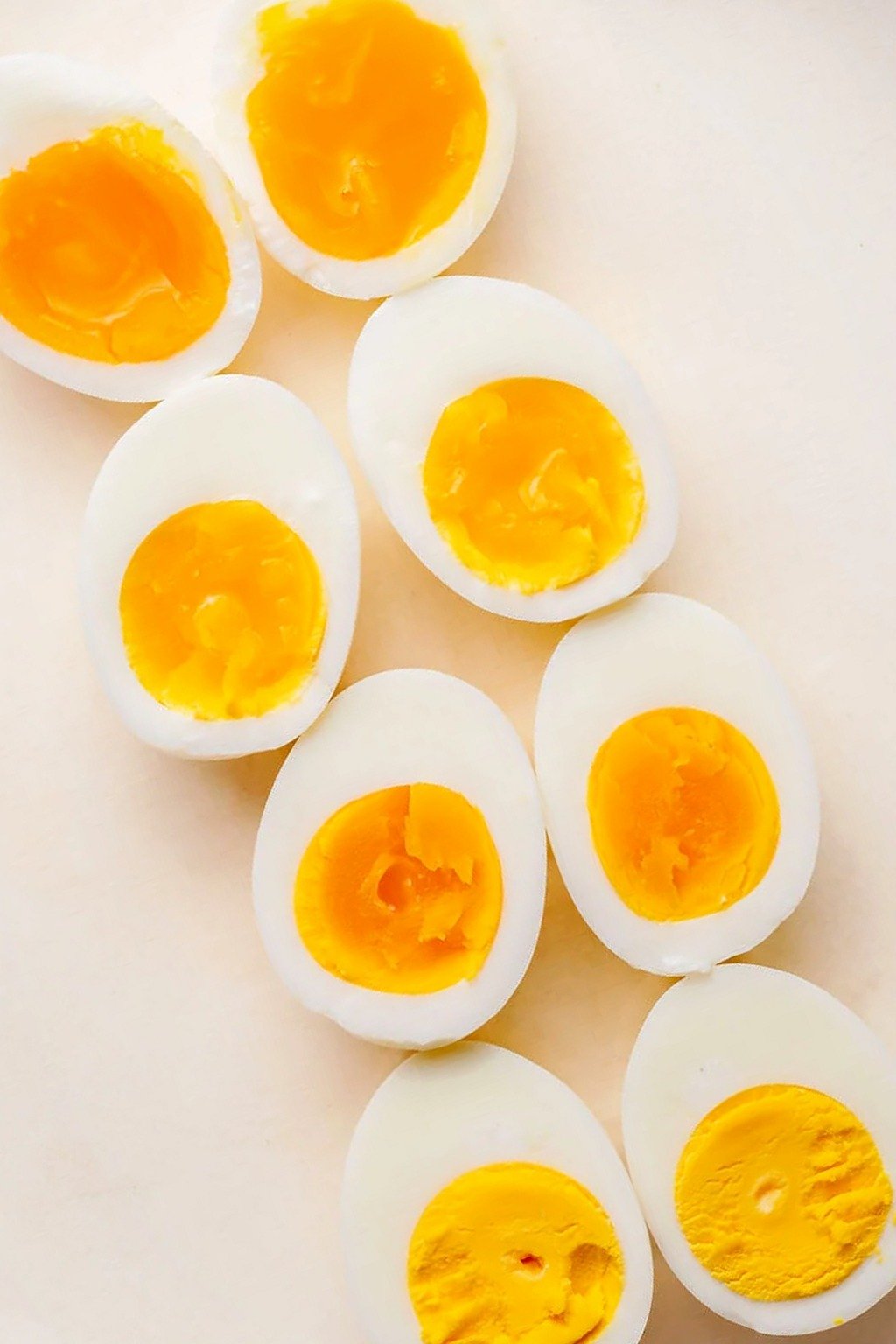
- Set the Timer: Use the following durations based on your desired yolk consistency: 6-7 minutes for soft-boiled, 8-9 minutes for jammy yolks, or 11-12 minutes for fully set hard-boiled eggs.
- Immediate Cooling: Carefully remove the eggs with a slotted spoon and place them immediately into a bowl filled with ice and water.
- Chill Thoroughly: Let the eggs remain in the ice bath for at least 15 minutes. This halts the cooking process and helps the egg contract away from the shell.
- Peel the Eggs: Gently tap the wide end of the egg to crack the shell. Peel the egg under a thin stream of cool running water for a smoother finish.
Selecting Your Ideal Egg Doneness
The texture of the yolk depends entirely on the precise timing of the boil. For soft-boiled eggs, 6 to 7 minutes results in a liquid yolk and soft whites, ideal for dipping toast.
Jammy or custardy yolks are achieved between 8 and 9 minutes. This texture is popular for ramen toppings or avocado toast where a thick but semi-liquid center is desired.
For traditional hard-boiled eggs, 11 to 12 minutes is the sweet spot for large eggs. This produces a fully set, bright yellow yolk that is firm but not chalky.
Avoid cooking eggs for 14 to 15 minutes. Overcooking leads to a rubbery white and the development of a gray-green ring around the yolk due to a reaction between sulfur and iron.
Mastering the Art of Easy Peeling
The most frustrating part of boiling eggs is often the shell. Starting with boiling water, rather than cold water, creates a thermal shock that causes the egg white to contract instantly.
This immediate contraction pulls the membrane away from the shell, making it much easier to remove later. Using fridge-cold eggs enhances this temperature differential.
The ice bath is equally critical. It stops the internal heat from continuing to cook the egg and further shrinks the egg inside the shell.
When peeling, always start at the wider end of the egg. This is where the air pocket is located, providing a natural starting point to get under the membrane.
Peeling under running water helps lubricate the space between the shell and the white. The water flushes away small fragments of shell and helps the membrane slide off.
Professional Cooking Tips for Consistency
Egg age plays a significant role in how easily they peel. Eggs that are 5 to 10 days old typically peel better than farm-fresh eggs because the pH level of the white increases over time.
Always cook eggs in a single layer. If eggs are crowded or stacked, they may cook unevenly, and the water temperature will drop too significantly when they are added.
Use a digital timer for every batch. Even a difference of 60 seconds can change a jammy yolk into a hard-boiled one, so precision is key for consistency.
Avoid adding vinegar or baking soda to the water. While common in some traditions, these additives are unnecessary if you use the boiling water start and the ice bath method.
If using extra-large or jumbo eggs, add approximately 30 to 60 seconds to the cook time. Larger eggs have more mass and require more time for heat to reach the center.
Essential Storage and Freshness Guidelines
For maximum freshness, store hard-boiled eggs in their shells. In an airtight container in the refrigerator, unpeeled eggs will stay fresh for up to 7 days.
If you prefer to peel your eggs in advance, store them in an airtight container with a damp paper towel. This prevents the whites from drying out and becoming rubbery.
Peeled eggs have a shorter shelf life and should be consumed within 3 days. Always ensure the container is sealed to prevent the eggs from absorbing odors from other foods.
Follow the two-hour rule for food safety. Refrigerate your cooked eggs within two hours of cooking, and do not leave them at room temperature for longer than two hours.
Never freeze hard-boiled eggs. Freezing alters the protein structure of the egg whites, resulting in a watery and rubbery texture once thawed that is unpleasant to eat.
Troubleshooting Common Egg Issues
If you notice a gray or green ring around the yolk, your eggs are overcooked. This is a chemical reaction and, while safe to eat, it indicates the egg was boiled too long or not cooled quickly enough.
Cracked shells during the boiling process usually happen because the eggs were dropped in too aggressively. Using a slotted spoon to lower them gently minimizes this risk.
If the shell is sticking to the white despite an ice bath, try peeling the egg by rolling it gently on the counter first. This creates a network of small cracks over the entire surface.
Watery whites can occur if the eggs are undercooked or if they were frozen and thawed. Ensure you stick to the timing guides for the specific size of egg you are using.
If the eggs are difficult to peel even with the hot-start method, consider the age of the eggs. Very fresh eggs have a stronger bond between the membrane and the shell.
Serving and Culinary Applications
Hard-boiled eggs are an excellent base for a variety of dishes. For a classic egg salad, mash hard-boiled eggs with mayonnaise, mustard, salt, and pepper.
They are a staple for Cobb salads, providing a rich protein element alongside greens, chicken, and avocado. Slice them lengthwise for a professional presentation.
For a quick healthy snack, slice a hard-boiled egg and season it with paprika, salt, and a dash of hot sauce. They are perfect for meal-prepping throughout the work week.
Jammy eggs are ideal for ramen, shakshuka, or as a topping for steamed vegetables. The semi-liquid yolk acts as a natural sauce for the other ingredients.
Deviled eggs are a classic appetizer. Halve the hard-boiled eggs and mix the yolks with creamy condiments and spices before piping them back into the whites.
Frequently Asked Questions
Why should I use fridge-cold eggs instead of room-temperature eggs? The temperature shock of cold eggs hitting boiling water helps the shell release more easily.
Can I use a different pot for boiling? Any deep saucepan will work, as long as it is large enough to hold the eggs in a single layer with plenty of water to cover them.
Is it necessary to bring the water to a boil first? Yes, the “hot start” is the most effective way to ensure the eggs are easy to peel compared to the “cold start” method.
What is the best way to prevent the eggs from bouncing and cracking? Lowering the heat to low before adding the eggs and using a spoon prevents them from hitting the bottom of the pot.
Can I boil eggs in salted water? Adding salt does not significantly affect the peeling process, but it can help seal small cracks if an egg happens to break during cooking.
Print The Ultimate Guide to Stove Top Hard-Boiled Eggs
- Total Time: 32 minutes
- Yield: 6 eggs 1x
- Diet: Vegetarian
Description
Want perfect hard-boiled eggs every single time? I tested multiple stove top methods and found 2 easy techniques that deliver consistent, delicious results and eggs that peel effortlessly.
Ingredients
- 6–12 large eggs
- water
- ice
Instructions
- Bring water to a boil: Bring a large pot (about 3 quarts) of water to a full, rolling boil over high heat.
- Lower the heat & add in eggs: Reduce the heat to low, then carefully lower the eggs into the water using a stainless steel spider skimmer/strainer or slotted spoon.
- Return to a medium boil to boil briefly: Bring the water back to a medium boil (not aggressive) and boil the eggs, uncovered, for 30 seconds.
- Cover & reduce heat: Cover the pot, reduce the heat to low, and maintain a gentle simmer for your desired cook time.
- Cook: Soft-boiled: 6-7 minutes; Jammy: 8-9 minutes; Hard-boiled: 11-12 minutes.
- Ice bath: Remove eggs with a slotted spoon and transfer immediately to an ice water bath. Chill for at least 15 minutes.
- Peel: Gently tap the bottom (wide end) of the egg to crack the shell. Peel under a thin stream of cold running water.
Notes
Don’t crowd the eggs. For extra large or jumbo eggs, adjust cook time by ~1 minute more. Store unpeeled eggs in the refrigerator for up to 7 days, or peeled eggs for up to 3 days.
- Prep Time: 5 minutes
- Cook Time: 12 minutes
- Category: Breakfast
- Method: Stove Top
- Cuisine: American
Nutrition
- Serving Size: 1 egg
- Calories: 63 kcal
- Sugar: 0.2 g
- Sodium: 62 mg
- Fat: 4 g
- Saturated Fat: 1 g
- Unsaturated Fat: 3 g
- Trans Fat: 0.02 g
- Carbohydrates: 0.3 g
- Fiber: 0 g
- Protein: 6 g
- Cholesterol: 164 mg
Leave a Reply