This one-pan meal combines salty feta cheese with fresh vegetables and eggs for a rich breakfast or brunch. It is an efficient way to get protein and greens into your morning routine using a single oven-safe skillet. This recipe delivers a satisfying blend of textures and flavors with minimal cleanup.
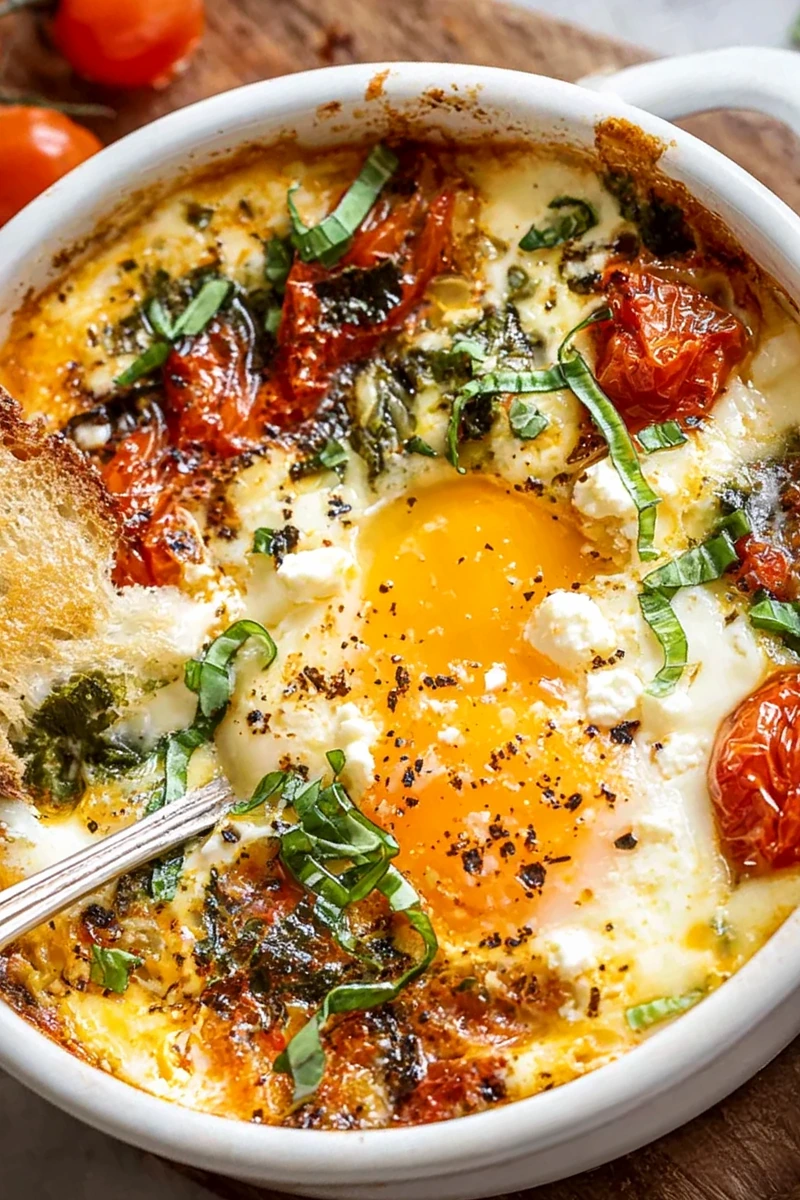
List of ingredients
- 2 cups cherry or grape tomatoes – whole or halved for more sauce.
- 1 red bell pepper, diced – adds sweetness and color.
- ½ small red onion, diced – provides a sharp aromatic base.
- 3 cloves minced garlic – for deep savory flavor.
- 8 ounces feta cheese – preferably in brine for creaminess.
- 4 tablespoons olive oil – used for sautéing and richness.
- 1 teaspoon dried oregano – adds a classic Mediterranean note.
- 1 teaspoon sea salt – enhances all natural flavors.
- ½ teaspoon dried thyme – provides a subtle earthy aroma.
- ½ teaspoon ground black pepper – adds a mild spicy bite.
- ½ teaspoon red pepper flakes – for a touch of warmth.
- 1 cup chopped baby spinach – adds nutrients and color.
- 4 large eggs – the protein center of the dish.
- Fresh basil or fresh chives – optional garnish for brightness.
step-by-step instructions
- Sauté Aromatics: Preheat your oven to 400°F (200°C). Heat olive oil in an oven-safe skillet over medium heat and sauté the diced red bell pepper and red onion for 5-7 minutes until they are soft.
- Add Garlic and Tomatoes: Stir in the minced garlic and cook for 1 minute until fragrant. Add the cherry tomatoes and cook for 3-5 minutes until they begin to soften and release juices.
- Season the Base: Stir in the dried oregano, dried thyme, ground black pepper, sea salt, and red pepper flakes. Simmer the mixture for 2-3 minutes to bloom the spices.
- Layer Cheese and Greens: Crumble the feta cheese evenly over the vegetables. Scatter the chopped baby spinach on top and gently tuck the leaves around the feta pieces.
- Prepare Egg Wells: Use a spoon to create 4 distinct wells in the mixture. Carefully crack one egg into each well, keeping the yolk intact.
- Bake: Place the skillet in the oven and bake for 10-15 minutes. Remove when the egg whites are opaque and set, but the yolks remain runny and the feta is bubbly.
- Garnish and Serve: Remove from the oven and sprinkle with fresh basil or chives if desired. Serve immediately from the skillet with crusty bread.
Optimizing Your Cookware
Choosing a Cast Iron Skillet
Cast iron is ideal for this recipe because it retains heat exceptionally well. This ensures that the bottom of the vegetable base continues to caramelize while the eggs bake from the top down. It also provides a rustic presentation when serving directly from the pan.
Using Ceramic Oven-Safe Pans
Ceramic pans provide very even heat distribution, which helps prevent the eggs from cooking too quickly on the edges. Ensure your ceramic dish is rated for 400°F to avoid thermal shock. These pans are often lighter and easier to handle than cast iron.
Avoiding Non-Stick Pans in High Heat
Avoid using non-stick skillets if they have coatings that cannot withstand 400°F. High temperatures can degrade certain non-stick surfaces and release harmful fumes. Always check the manufacturer’s temperature limit before placing a pan in the oven.
Vegetable Preparation Techniques
Dicing Peppers for Even Cooking
Cut the red bell pepper into small, uniform cubes of about half an inch. Consistent sizing ensures that all pieces soften at the same rate during the initial sauté. This prevents some pieces from being raw while others are overcooked.
Preventing Garlic from Burning
Add the minced garlic only after the onions and peppers have softened. Garlic has a lower burn point and can turn bitter if cooked for too long. One minute of sautéing is usually sufficient to release its aromatic oils.
Handling Tomatoes for Better Sauce
Leave cherry tomatoes whole for a burst of juice when bitten, or halve them to create a thicker sauce. Halving the tomatoes allows their juices to emulsify with the olive oil and feta during the baking process. This creates a more cohesive base for the eggs.
Sautéing Onions for Sweetness
Cook the red onions until they are translucent and just starting to brown. This process breaks down the harsh sulfur compounds and brings out the natural sugars. This sweetness balances the salty profile of the feta cheese.
Cheese and Egg Management
Selecting Brined Feta for Creaminess
Choose a block of feta stored in brine rather than pre-crumbled varieties. Brined feta has a higher moisture content, which allows it to soften and become creamy in the oven. Pre-crumbled feta often contains anti-caking agents that prevent it from melting smoothly.
Managing Egg Temperature
Using room-temperature eggs can help them cook more evenly and slightly faster. If you are in a rush, place cold eggs in a bowl of warm water for a few minutes before cracking. This prevents the cold eggs from lowering the temperature of the vegetable base.
Precise Egg Placement
Make sure the wells are deep enough to cradle the egg without the white spreading too far across the surface. If the white spreads too much, the eggs may take longer to set. This keeps the yolks centered and visually appealing.
Avoiding Yolk Breakage
Crack each egg into a small bowl first before gently sliding it into the well. This prevents shells from entering the pan and ensures the yolk does not break during the transfer. An intact yolk is essential for the creamy texture of the final dish.
Flavor Enhancements and Variations
Adding Sun-Dried Tomatoes for Depth
Incorporate two tablespoons of chopped sun-dried tomatoes along with the fresh cherry tomatoes. The concentrated sweetness and tang of sun-dried tomatoes add a layer of complexity to the sauce. This variation works well for those who prefer a more intense Mediterranean flavor.
Using Fresh Instead of Dried Herbs
Replace dried oregano and thyme with fresh versions, using three times the quantity. Fresh herbs provide a brighter, more grassy flavor profile. Add fresh herbs toward the end of the sauté process to prevent them from burning.
Adjusting Heat with Different Peppers
For a spicier version, replace the red bell pepper with a mild yellow chili or add extra red pepper flakes. If you prefer a milder taste, omit the flakes entirely. The sweetness of the onion will balance most levels of heat.
Balancing Salt Content
Since feta cheese is naturally very salty, be cautious with additional sea salt. Taste the vegetable mixture before adding the feta to ensure the seasoning is balanced. You can always add more salt at the table, but you cannot remove it once baked.
Serving Recommendations
Pairing with Sourdough Bread
Toast thick slices of sourdough bread and rub them with a raw garlic clove. The acidity and crunch of the sourdough complement the richness of the melted feta and runny yolks. Use the bread to scoop up the sauce from the bottom of the pan.
Serving with Fresh Arugula
Place the baked eggs alongside a bed of fresh arugula tossed in lemon juice and olive oil. The peppery notes of the arugula cut through the saltiness of the cheese. This adds a refreshing, crisp element to the meal.
Using Warm Pita for Dipping
Warm pita bread in the oven for the last two minutes of the egg baking time. The soft, pillowy texture of the pita is perfect for absorbing the tomato and feta juices. This makes the dish feel more like a shared appetizer or brunch platter.
Side of Roasted Potatoes
Serve this dish with small roasted potatoes seasoned with paprika and rosemary. The heartiness of the potatoes makes the meal more filling for a dinner occasion. Ensure the potatoes are roasted at the same temperature as the eggs for timing efficiency.
Storage and Reheating
Storing the Vegetable Base
If you have leftover vegetable and feta mixture without eggs, store it in an airtight container in the fridge for up to three days. You can reheat the base in a pan and crack fresh eggs into it for a quick meal. This is an excellent way to meal prep the foundation of the dish.
Reheating Baked Eggs Safely
Avoid using a microwave to reheat baked eggs, as this often makes the whites rubbery. Instead, place the skillet in a 300°F oven for 5-10 minutes. Cover the pan with foil to prevent the top from drying out while the center warms through.
Freezing the Pre-Sautéed Mix
The sautéed pepper, onion, and tomato mixture can be frozen for up to two months. Thaw the mixture overnight in the refrigerator before adding feta and eggs. Do not freeze the dish after the eggs have been added.
Refrigeration Time Limits
Fully cooked baked feta eggs should be consumed within 24 hours if refrigerated. After this time, the texture of the eggs can change, and the spinach may release excess water. Always ensure the dish is cooled slightly before sealing it in the fridge.
Troubleshooting Common Issues
Preventing Runny Egg Whites
If the whites are still translucent while the yolks are overcooking, increase the oven temperature by 25°F for the last two minutes. Alternatively, you can turn on the broiler for 60 seconds to set the tops of the whites. Watch the pan closely to avoid burning the feta.
Avoiding Hard Yolks
Pull the skillet out of the oven while the yolks still have a slight jiggle when the pan is shaken. Remember that carry-over cooking will continue to set the yolks for a few minutes after the pan is removed from the heat. This ensures a creamy center.
Fixing a Watery Vegetable Base
If the sauce appears too watery, sauté the vegetables for an additional 3-5 minutes before adding the cheese. This allows more of the moisture from the tomatoes and onions to evaporate. Reducing the amount of baby spinach can also prevent excess liquid release.
Dealing with Unmelted Feta
If the feta remains too firm, ensure your oven is fully preheated to 400°F before the pan goes in. You can also use a slightly smaller pan so the ingredients are packed more densely, which traps more heat. Brined feta will always melt more effectively than dry crumbles.
Frequently Asked Questions
Can I make this dish ahead of time?
You can prepare the vegetable base and crumble the feta in advance. However, you should crack the eggs and bake the dish immediately before serving to ensure the best texture and flavor.
What kind of feta is best?
A high-quality block of feta packed in brine is the best choice. It provides a creamier consistency and a more authentic salty flavor compared to pre-crumbled options.
Can I use egg whites only?
You can use egg whites, but the dish will lose the richness provided by the yolks. You may need to add a bit more cheese or a splash of cream to the base to compensate for the lost creaminess.
Can this be made in a casserole dish?
Yes, a casserole dish works well, but you will lose the ability to sauté the vegetables in the same pan. You will need to cook the vegetables in a separate skillet first, then transfer them to the dish.
How do I adjust for more than 4 eggs?
Use a larger skillet and increase the quantities of all vegetables and cheese proportionally. Ensure the eggs are not crowded, as this can lead to uneven cooking times.
Print Savory Baked Feta Eggs with Spinach and Tomatoes
- Total Time: 40 minutes
- Yield: 4 servings 1x
- Diet: Vegetarian
Description
A delicious and simple recipe for baked feta eggs with cherry tomatoes, bell pepper, and spinach, baked to perfection in a flavorful feta and vegetable sauce.
Ingredients
- 2 cups cherry or grape tomatoes
- 1 red bell pepper, diced
- ½ small red onion, diced
- 3 cloves minced garlic
- 8 ounces microbial-rennet feta cheese
- 4 tablespoons olive oil
- 1 teaspoon dried oregano
- 1 teaspoon sea salt
- ½ teaspoon dried thyme
- ½ teaspoon ground black pepper
- ½ teaspoon red pepper flakes
- 1 cup chopped baby spinach
- 4 large eggs
- Optional: chopped fresh basil or fresh chives
Instructions
- Step: Preheat oven to 400°F (200°C). Add olive oil to an oven-safe skillet over medium heat. Sauté diced red bell pepper and red onion for 5-7 minutes until softened.
- Step: Add minced garlic and cook for 1 minute until fragrant. Add cherry tomatoes and cook for 3-5 minutes until they start to soften.
- Step: Stir in dried oregano, dried thyme, ground black pepper, sea salt, and red pepper flakes. Simmer for 2-3 minutes.
- Step: Crumble feta cheese over the vegetable mixture and scatter chopped baby spinach on top. Gently tuck spinach around the feta.
- Step: Create 4 wells in the mixture and carefully crack one egg into each well.
- Step: Bake for 10-15 minutes, or until egg whites are set and yolks are runny. The feta should be bubbly.
- Step: Remove from oven, garnish with fresh basil or chives if desired, and serve directly from the skillet with crusty bread.
Notes
Serve with warm crusty bread, pita bread, or a simple green salad.
- Prep Time: 15 minutes
- Cook Time: 25 minutes
- Category: Breakfast
- Method: Baking
- Cuisine: Mediterranean
Nutrition
- Serving Size: 1 serving
- Calories: 410 kcal
- Sugar: 6 g
- Sodium: 920 mg
- Fat: 32 g
- Saturated Fat: 13 g
- Unsaturated Fat: 19 g
- Trans Fat: 0 g
- Carbohydrates: 14 g
- Fiber: 3 g
- Protein: 19 g
- Cholesterol: 265 mg
Leave a Reply