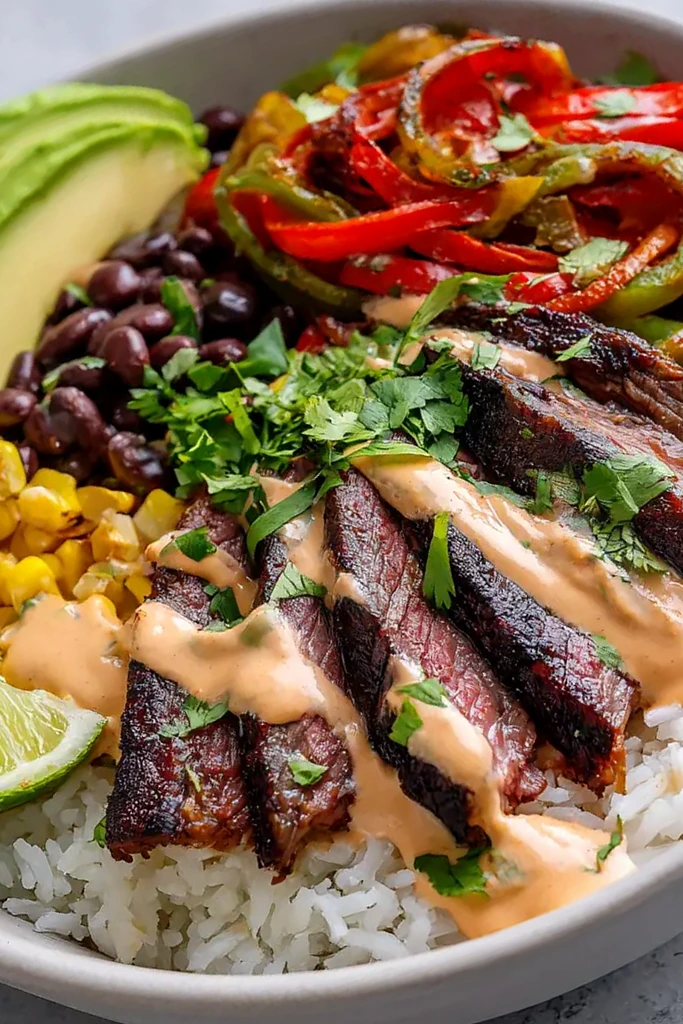
These high-protein steak fajita bowls are an ideal solution for healthy weeknight dinners and efficient meal prep. They combine perfectly seared flank steak and blistered vegetables over a fluffy rice base for a balanced, nutrient-dense meal.
List of ingredients
- 1.5 lbs flank steak (680g) – lean and flavorful for searing.
- 1 tbsp olive oil (15ml) – for steak marinade.
- 1 tsp chili powder – adds traditional Tex-Mex warmth.
- 0.5 tsp smoked paprika – provides a deep, woody aroma.
- 0.5 tsp cumin – adds earthy notes.
- 0.5 tsp garlic powder – for savory depth.
- 0.5 tsp onion powder – enhances the aromatic profile.
- Salt and black pepper – to taste.
- 1 red bell pepper, sliced – for sweetness and color.
- 1 green bell pepper, sliced – for a classic fajita flavor.
- 1 large white onion, sliced – caramelizes for natural sweetness.
- 1 tbsp olive oil (15ml) – for sautéing vegetables.
- 0.5 cup sour cream (120g) – the creamy base for the sauce.
- 1-2 chipotle peppers in adobo – for smoky heat.
- 1 tbsp adobo sauce (15ml) – adds concentrated flavor.
- 1 tbsp fresh lime juice (15ml) – provides acidity.
- 1 clove garlic, minced – adds a sharp aromatic kick.
- 0.25 tsp salt – or to taste.
- 1.5 cups long-grain white rice, uncooked (280g) – the neutral base.
- 3 cups water or broth (720ml) – for cooking the rice.
- 1 can (15 oz) black beans, rinsed (425g) – adds protein and fiber.
- 1 cup corn kernels (165g) – frozen or canned, for roasting.
- 1 large avocado – for healthy fats and creaminess.
- 0.25 cup fresh cilantro, finely chopped (15g) – for a fresh garnish.
- Lime wedges – for serving.
step-by-step instructions
- Prepare the Base and Sauce: Cook the long-grain white rice according to the package directions. You may add a pinch of salt or a small amount of oil to the water for better flavor. Once cooked, fluff the rice with a fork and keep it covered. While the rice is cooking, place the sour cream, chipotle peppers, adobo sauce, lime juice, minced garlic, and salt into a blender. Process until the mixture is completely smooth. If the sauce is too thick, stir in water one teaspoon at a time until it reaches the desired consistency.
- Sear the Steak: Pat the flank steak dry with paper towels to ensure a proper sear. Rub the steak with 1 tablespoon of olive oil and coat it thoroughly with the chili powder, smoked paprika, cumin, garlic powder, onion powder, salt, and pepper. Heat a large cast-iron skillet over high heat until it begins to smoke slightly. Place the steak in the pan and sear for 3 to 5 minutes per side for medium-rare. Remove the meat from the skillet and let it rest on a cutting board for at least 10 minutes to redistribute the juices.
- Sauté the Vegetables and Corn: Reduce the skillet heat to medium-high. Add another tablespoon of olive oil, ensuring you scrape up the browned bits from the steak. Add the sliced bell peppers and white onion. Sauté for 8 to 10 minutes, stirring occasionally, until the vegetables are tender-crisp and show charred marks. Remove the vegetables from the pan. Add the corn kernels to the hot skillet and cook for 3 to 4 minutes without stirring frequently, allowing the corn to brown and roast.
- Assemble the Bowls: Slice the rested flank steak thinly across the grain to ensure maximum tenderness. Divide the cooked rice among four shallow bowls. Arrange the sliced steak, sautéed peppers, caramelized onions, black beans, and roasted corn in sections on top of the rice. Add fanned slices of fresh avocado to the side. Drizzle the creamy chipotle sauce over the ingredients. Garnish with chopped cilantro and serve with a lime wedge.
Selecting the Best Cut of Beef
Flank steak is the preferred choice for this recipe because it is lean and possesses a strong beefy flavor that stands up well to bold spices. Its long, coarse muscle fibers make it ideal for slicing into thin strips that remain satisfyingly chewy but tender when cut correctly.
Skirt steak is an excellent alternative if flank steak is unavailable. Skirt steak typically has more fat marbling, which can result in a more succulent bite and a deeper flavor profile. When using skirt steak, be mindful that it can cook slightly faster than flank steak due to its thickness.
Avoid using very lean cuts like eye of round or too fatty cuts like ribeye for this specific application. Round steak often becomes too tough under high heat, while ribeye may release too much fat, preventing the vegetables from searing properly in the same pan.
Mastering the High-Heat Sear
Achieving a restaurant-quality char requires a very hot cooking surface. A cast-iron skillet is the optimal tool because it retains heat significantly better than stainless steel or non-stick pans. This ensures the meat sears instantly upon contact, creating a dark crust known as the Maillard reaction.
Patting the meat dry is a non-negotiable step. Any surface moisture on the steak will turn into steam when it hits the pan, which prevents the meat from browning and can lead to a grey, boiled appearance. Use heavy-duty paper towels to remove all visible moisture before applying oil and spices.
Avoid overcrowding the pan. If the skillet is too small for the piece of meat, cook in batches. Overcrowding drops the pan temperature rapidly and releases moisture, which causes the steak to steam rather than sear, ruining the texture of the crust.
The Science of Slicing Against the Grain
Understanding the grain of the meat is the most important part of preparing flank steak. The grain refers to the direction in which the muscle fibers run. In flank steak, these fibers are long, prominent, and run lengthwise across the cut.
Slicing perpendicular to these fibers, or against the grain, cuts the long muscle strands into very short pieces. This makes the meat much easier to chew and prevents the steak from feeling rubbery or tough. Slicing with the grain leaves the long fibers intact, requiring more effort to break down during eating.
To identify the grain, look closely at the raw or cooked meat for the parallel lines of the muscle. Position your knife at a 90-degree angle to those lines. For the best results, slice the steak into thin strips about 1/4 inch thick.
Optimizing the Chipotle Cream Sauce
The chipotle sauce provides the necessary acidity and smokiness to balance the richness of the beef. Using chipotle peppers in adobo allows you to control the heat level precisely. For a mild sauce, use a single pepper; for a bolder kick, use two or more.
If you prefer a higher protein version of the sauce, replace the sour cream with plain Greek yogurt. Greek yogurt provides a similar tang and creamy texture but increases the overall protein content of the bowl. You may need to add an extra teaspoon of lime juice to mimic the tartness of sour cream.
For a dairy-free alternative, use a base of cashew cream or a thick vegan mayonnaise. Ensure the substitute is unsweetened to avoid clashing with the savory and smoky notes of the adobo sauce and spices.
Grain and Base Substitutions
While long-grain white rice is the traditional base, several alternatives can be used to change the nutritional profile. Brown rice offers more fiber and a nuttier flavor, though it requires a longer cooking time. Quinoa is another excellent high-protein option that cooks quickly and pairs well with the chipotle sauce.
For those reducing carbohydrate intake, cauliflower rice is a practical substitute. Sauté the cauliflower rice in a separate pan with a small amount of olive oil and salt until tender. This keeps the bowl light while maintaining the volume and texture of the original recipe.
Farro or barley can also be used for a heartier, chewier texture. These ancient grains absorb the flavors of the steak juices and sauce effectively, making them a satisfying alternative for meal prep.
Vegetable Variations and Prep
Bell peppers and onions are the classic fajita trio, but other vegetables can be added for variety. Sliced zucchini or yellow squash work well, as they cook quickly and absorb the spices. Portobello mushroom strips can be added for an extra savory, umami-rich element.
To ensure the vegetables cook evenly, cut them into uniform strips. If the onion slices are too thick compared to the peppers, they may not caramelize at the same rate. Aim for strips approximately 1/4 to 1/2 inch wide.
The goal for the vegetables is a blistered exterior and a tender interior. Avoid stirring the vegetables too frequently in the pan. Letting them sit undisturbed for a few minutes allows the natural sugars to caramelize and create those characteristic dark spots.
Meal Prep and Storage Logic
To maintain the quality of the ingredients, store the components separately. Place the cooked rice, seared steak, and sautéed vegetables in airtight containers. This prevents the rice from becoming mushy and the steak from overcooking during the reheating process.
Store the chipotle sauce in a small, separate condiment container. The sauce is best enjoyed cold, and heating it can cause the dairy to separate. Similarly, keep the avocado separate or add it fresh to each bowl just before eating to prevent oxidation and browning.
The cooked components will stay fresh in the refrigerator for up to four days. Ensure the containers are fully cooled before sealing them to prevent excess condensation, which can affect the texture of the seared meat and vegetables.
Effective Reheating Methods
To avoid turning the steak rubbery, avoid overheating it in the microwave. The best method is to gently reheat the steak and vegetables in a skillet over medium heat with a splash of water or broth to maintain moisture.
If using a microwave, use a medium power setting and heat the rice and steak in short 30-second intervals. Stirring between intervals ensures the heat is distributed evenly, preventing the edges of the meat from becoming tough while the center remains cold.
Once the base components are warm, assemble the bowl. Add the cold chipotle sauce, fresh avocado, and cilantro last. This contrast between the warm steak and vegetables and the cool toppings is essential for the dish’s flavor balance.
Troubleshooting Common Issues
If the steak comes out too tough, it is usually due to one of two reasons: it was not rested, or it was sliced with the grain. Always allow at least 10 minutes of resting time to let the muscle fibers relax and the juices redistribute.
If the vegetables are soggy rather than charred, the pan was likely overcrowded or the heat was too low. To fix this in future batches, increase the heat and cook the vegetables in two smaller increments to ensure the pan stays hot enough for searing.
If the chipotle sauce is too spicy, stir in an extra tablespoon of sour cream or Greek yogurt. The fat in the dairy helps neutralize the capsaicin from the chipotle peppers, mellowing the heat without losing the smoky flavor.
Nutritional Balance and Pairing
This bowl is naturally balanced with complex carbohydrates from the rice, lean protein from the beef and beans, and healthy fats from the avocado. To increase the nutrient density, you can stir raw baby spinach or shredded kale into the warm rice just before assembling.
For a side dish, a crisp cucumber salad with lime and cilantro provides a refreshing contrast to the smoky flavors of the bowl. A side of sliced radishes can also add a peppery crunch that complements the richness of the steak.
To make the meal even heartier, consider adding a scoop of pinto beans alongside the black beans. This adds a different texture and additional plant-based protein to the dish, making it more filling for active individuals.
Print High-Protein Steak Fajita Power Bowls
- Total Time: 45 minutes
- Yield: 4 bowls 1x
- Diet: General
Description
This Steak Fajita Bowl recipe features perfectly seared flank steak, blistered peppers, and caramelized onions over fluffy rice. Topped with a creamy chipotle sauce, this vibrant power bowl is a healthy, delicious, and easy-to-make weeknight dinner.
Ingredients
- 1.5 lbs flank steak (680g)
- 1 tbsp olive oil (15ml)
- 1 tsp chili powder
- 0.5 tsp smoked paprika
- 0.5 tsp cumin
- 0.5 tsp garlic powder
- 0.5 tsp onion powder
- Salt and black pepper to taste
- 1 red bell pepper, sliced
- 1 green bell pepper, sliced
- 1 large white onion, sliced
- 1 tbsp olive oil (15ml)
- 0.5 cup sour cream (120g)
- 1–2 chipotle peppers in adobo plus 1 tbsp (15ml) adobo sauce
- 1 tbsp fresh lime juice (15ml)
- 1 clove garlic, minced
- 0.25 tsp salt
- 1.5 cups long-grain white rice, uncooked (280g)
- 3 cups water or vegetable broth (720ml)
- 1 can (15 oz) black beans, rinsed (425g)
- 1 cup corn kernels (165g)
- 1 large avocado
- 0.25 cup fresh cilantro, finely chopped (15g)
- Lime wedges for serving
Instructions
- Prepare the Rice and Chipotle Sauce: Cook the rice according to package directions; fluff with a fork and keep covered. Combine sour cream, chipotle peppers, adobo sauce, fresh lime juice, minced garlic, and salt in a blender, blend until smooth, and set aside.
- Cook the Steak: Pat flank steak dry, rub with 1 tbsp olive oil and season with chili powder, smoked paprika, cumin, garlic powder, onion powder, salt, and pepper. Sear in a hot cast-iron skillet for 3-5 minutes per side for medium-rare, then let rest for 10 minutes.
- Sauté the Vegetables and Corn: In the same skillet, add 1 tbsp olive oil and sauté sliced bell peppers and onion for 8-10 minutes until tender-crisp and blistered. Remove vegetables, then cook corn kernels in the skillet for 3-4 minutes until roasted and browned.
- Assemble Your Steak Fajita Bowl: Slice rested steak thinly against the grain. In bowls, layer white rice, sliced steak, blistered peppers and onions, black beans, and roasted corn. Top with sliced avocado, drizzle with chipotle sauce, and garnish with cilantro and a lime wedge.
Notes
Avoid overcrowding the pan to ensure searing rather than steaming. Use high heat for a proper char. Always slice flank steak perpendicular to the muscle fibers (against the grain) for maximum tenderness. Allow the steak to rest for 10 minutes to maintain juiciness.
- Prep Time: 20 minutes
- Cook Time: 25 minutes
- Category: Dinner, Lunch, Main Course
- Method: Sautéing
- Cuisine: Mexican, Tex-Mex
Nutrition
- Serving Size: 1 bowl
- Calories: 762 kcal
- Sugar: 10 g
- Sodium: 950 mg
- Fat: 35 g
- Saturated Fat: 12 g
- Unsaturated Fat: 23 g
- Trans Fat: 0 g
- Carbohydrates: 72 g
- Fiber: 15 g
- Protein: 52 g
- Cholesterol: 110 mg
Leave a Reply