This creamy lemon garlic shrimp pasta is a quick, restaurant-quality meal that comes together in just 30 minutes. It combines tender shrimp and al dente fettuccine in a rich, zesty butter sauce. It is an ideal choice for a sophisticated weeknight dinner.
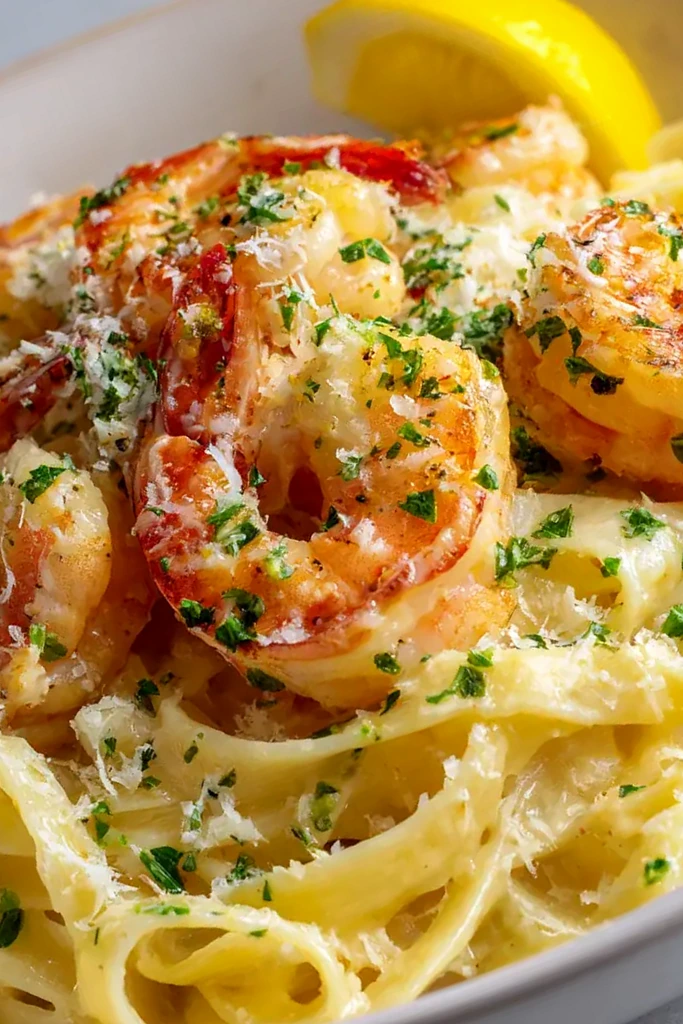
List of ingredients
- 12 oz Fettuccine (approx 340g) – use a high-quality durum wheat pasta.
- 1 lb Large Shrimp (approx 450g) – peeled, deveined, and patted dry.
- 2 tbsp Extra Virgin Olive Oil (30ml) – for high-heat searing.
- 6 tbsp Unsalted Butter (85g) – divided for searing and emulsifying the sauce.
- 4 cloves Garlic – finely minced for a strong aromatic base.
- 1/4 cup Vegetable Broth (60ml) – used to deglaze the pan and add depth.
- 1/2 cup Heavy Cream (120ml) – provides the creamy, velvety texture.
- 1 Large Lemon – freshly juiced and zested.
- 1/4 cup Fresh Parsley (15g) – finely chopped for color and brightness.
- 1/2 cup Parmesan Cheese (50g) – freshly grated, plus extra for garnish.
- Kosher Salt and Freshly Cracked Black Pepper – used to taste throughout.
step-by-step instructions
- Boil the Pasta: Cook fettuccine in heavily salted water until al dente. Reserve 1 cup of the starchy pasta water before draining.
- Sear the Shrimp: Pat shrimp dry and season with salt and pepper. Heat olive oil in a large skillet over medium-high heat, then sear shrimp for 1-2 minutes per side until pink with golden edges. Remove and set aside.
- Sauté Aromatics: Reduce heat to medium and add 2 tbsp of butter. Add minced garlic and cook for 30 seconds until fragrant, then deglaze the pan with vegetable broth, scraping the bottom, and reduce by half.
- Build the Sauce: Stir in heavy cream, lemon juice, and zest. Bring to a simmer, then whisk in the remaining 4 tbsp of butter one piece at a time. Stir in parmesan cheese until melted and season with salt and pepper.
- Combine and Serve: Add drained pasta to the sauce and toss, using reserved pasta water to adjust consistency. Return shrimp and parsley to the pan, toss to combine, and serve with extra parmesan and a lemon wedge.
Necessary Kitchen Equipment
Large Stock Pot for Boiling Pasta
A large pot ensures the pasta has enough room to move, preventing the noodles from sticking together. Using plenty of water also helps maintain a consistent boiling temperature when the pasta is added.
Heavy-Bottomed Skillet for Searing
A stainless steel or cast iron skillet is ideal for achieving a deep golden-brown sear on the shrimp. These materials distribute heat evenly and allow for effective deglazing of the pan drippings.
Colander for Efficient Draining
A sturdy colander allows you to drain the pasta quickly while ensuring no noodles are lost. Always remember to scoop out your reserved pasta water before pouring the pot into the colander.
Kitchen Tongs for Tossing
Tongs provide the best grip for coating long strands of fettuccine in the creamy sauce. They allow you to lift and turn the pasta without breaking the noodles.
Zester or Microplane for Citrus
A fine zester allows you to capture the aromatic oils of the lemon skin without hitting the bitter white pith. This ensures the sauce remains bright and citrusy rather than bitter.
Ingredient Selection Tips
Choosing the Right Shrimp Size
Large shrimp (usually 21-25 count) are recommended because they maintain their structure during searing. Smaller shrimp may overcook too quickly, while jumbo shrimp may require longer cook times that can toughen the exterior.
The Benefit of Unsalted Butter
Using unsalted butter allows you to control the sodium levels of the sauce precisely. Since parmesan cheese and pasta water are already salty, unsalted butter prevents the dish from becoming over-seasoned.
Using Freshly Grated Parmesan
Freshly grated parmesan melts more smoothly into the sauce than pre-shredded versions. Pre-shredded cheeses often contain anti-caking agents like cornstarch, which can make the sauce grainy.
Selecting High-Quality Fettuccine
Choose a pasta made from 100% durum wheat semolina for the best al dente texture. High-quality pasta holds its shape better and provides a better surface for the sauce to cling to.
The Importance of Fresh Lemons
Freshly squeezed lemon juice has a vibrant acidity that bottled juice cannot replicate. The fresh zest adds a layer of essential oils that provides a floral aroma to the finished dish.
Optimizing the Sauce Texture
Creating a Stable Emulsion
Emulsification happens when fats and liquids are bound together. Whisking in cold butter one tablespoon at a time into the simmering cream creates a stable, glossy emulsion that won’t separate.
Balancing the Lemon Acidity
If the sauce feels too sharp, add an extra tablespoon of butter or a splash more cream. The fat helps mellow the acidity of the lemon juice while preserving the bright flavor.
Preventing Cream Curdling
Avoid boiling the sauce violently once the cream and lemon juice are added. Keep the sauce at a gentle simmer to prevent the proteins in the cream from separating due to high heat and acid.
Integrating the Parmesan Cheese
Stir the parmesan in slowly over low heat. Adding it too quickly or at too high a temperature can cause the cheese to clump rather than dissolve into the sauce.
Shrimp Searing Techniques
Achieving the Golden-Brown Crust
The key to a professional sear is the Maillard reaction, which requires high heat and dry surfaces. Ensure the skillet is shimmering with oil before adding the shrimp to prevent sticking.
Avoiding Overcrowding the Pan
Adding too many shrimp at once drops the pan temperature, causing the shrimp to steam in their own juices. Work in batches to ensure each piece has enough space to sear properly.
Timing the Sear for Tenderness
Shrimp cook extremely fast and can become rubbery if left too long. Remove them from the heat the moment they turn opaque and form a C-shape, rather than a tight O-shape.
The Importance of Dry Shrimp
Surface moisture creates steam, which prevents browning. Use paper towels to pat every shrimp completely dry before seasoning them with salt and pepper.
Customizing the Flavor Profile
Adding Fresh Leafy Greens
Fresh baby spinach or chopped kale can be stirred in during the final step. The residual heat from the pasta will wilt the greens perfectly without overcooking them.
Incorporating Red Pepper Flakes
For a spicy variation, add a pinch of crushed red pepper flakes to the butter when sautéing the garlic. This infuses the entire sauce with a subtle, warming heat.
Swapping Pasta Shapes
While fettuccine is traditional, linguine or spaghetti work equally well. For a heartier version, use penne or rigatoni, which capture the sauce inside the tubes.
Using Lighter Cream Alternatives
You can substitute heavy cream with half-and-half for a lighter sauce, though it will be less thick. For a dairy-free option, use full-fat coconut milk or a cashew-based cream.
Preservation and Reheating
Cold Storage Best Practices
Store leftover pasta in an airtight glass container in the refrigerator for up to two days. Keep the shrimp and pasta together so the noodles can absorb the remaining sauce.
Proper Stovetop Reheating
Reheat the pasta in a skillet over low to medium heat. Add a splash of water or vegetable broth to loosen the sauce and restore its original creamy consistency.
Why Freezer Storage Fails
Freezing is not recommended for cream-based seafood dishes. The emulsion in the sauce will likely break upon thawing, and the shrimp will lose their snap and become spongy.
Common Cooking Issues
Fixing a Thin or Watery Sauce
If the sauce is too thin, simmer it for an extra minute before adding the pasta. Alternatively, stir in a small amount of additional parmesan cheese to thicken the consistency.
Managing Burnt Garlic
Garlic burns quickly and becomes bitter. If the garlic turns dark brown, it is best to wipe the pan and start the sauce base over to avoid ruining the flavor of the dish.
Correcting Over-Salted Pasta
If the sauce is too salty, add a squeeze of extra lemon juice or a tablespoon of unsalted butter. The acid and fat help neutralize the perception of salt on the palate.
Preventing Rubbery Seafood
The most common cause of rubbery shrimp is overcooking during the initial sear. Remember that the shrimp will cook further when they are tossed back into the hot pasta at the end.
Frequently Asked Questions
Can I use frozen shrimp?
Yes, you can use frozen shrimp. Ensure they are completely thawed in the refrigerator or under cold running water and patted dry before cooking.
What is the best substitute for heavy cream?
Half-and-half is the closest substitute, though you may need to simmer the sauce slightly longer to achieve the same thickness.
Can I make this without butter?
You can use olive oil, but the sauce will lack the velvety richness and glossy finish that butter provides through emulsification.
How do I store leftover pasta?
Place it in an airtight container and refrigerate for up to 48 hours. Always reheat on a stovetop rather than in a microwave to maintain shrimp texture.
Which lemon is best for zest?
Use organic, conventional lemons with a bright yellow, smooth skin. Avoid lemons with thick, bumpy skins as they can be more difficult to zest finely.
Print Creamy Lemon Garlic Shrimp Pasta Guide
- Total Time: 30 minutes
- Yield: 4 servings 1x
- Diet: General
Description
Create a restaurant-worthy Lemon Garlic Shrimp Pasta in just 30 minutes. This recipe features al dente fettuccine in a glossy, creamy lemon butter sauce with perfectly seared shrimp, fresh parsley, and parmesan. An elegant and easy weeknight dinner.
Ingredients
- 12 oz Fettuccine (approx 340g)
- 1 lb Large Shrimp (peeled and deveined (approx 450g))
- 2 tbsp Extra Virgin Olive Oil (30ml)
- 6 tbsp Unsalted Butter (divided (85g))
- 4 cloves Garlic (finely minced)
- 1/4 cup Vegetable Broth (60ml)
- 1/2 cup Heavy Cream (120ml)
- 1 Large Lemon (juiced and zested)
- 1/4 cup Fresh Parsley (finely chopped (15g))
- 1/2 cup Parmesan Cheese (freshly grated (50g), plus more for garnish)
- Kosher Salt and Freshly Cracked Black Pepper (to taste)
Instructions
- Step 1: Cook fettuccine in heavily salted water until al dente. Reserve 1 cup of pasta water before draining.
- Step 2: Pat shrimp dry and season with salt and pepper. Heat olive oil in a large skillet over medium-high heat. Sear shrimp for 1-2 minutes per side until pink with golden-brown edges. Remove and set aside.
- Step 3: Reduce heat to medium, add 2 tbsp butter. Add minced garlic and cook until fragrant (30 seconds). Deglaze with vegetable broth, scraping the pan, and let it reduce by half.
- Step 4: Stir in heavy cream, lemon juice, and zest. Bring to a simmer. Whisk in the remaining 4 tbsp of butter one piece at a time. Stir in the parmesan cheese until melted. Season with salt and pepper.
- Step 5: Add the drained pasta to the sauce and toss. Use reserved pasta water to adjust consistency if needed. Return shrimp to the pan with the fresh parsley. Toss to combine. Serve immediately, garnished with more parmesan and a lemon wedge.
Notes
Don’t Overcook the Shrimp: They cook very quickly and will heat up again in the final step. The Power of Pasta Water: This starchy water is the secret to a smooth, emulsified sauce. Fresh is Best: Use fresh lemon juice, garlic, and parsley for the most vibrant flavor.
- Prep Time: 10 minutes
- Cook Time: 20 minutes
- Category: Dinner
- Method: Stovetop
- Cuisine: Italian-American
Nutrition
- Serving Size: 1 serving
- Calories: 750 kcal
- Sugar: 6 g
- Sodium: 820 mg
- Fat: 35 g
- Saturated Fat: 18 g
- Unsaturated Fat: 15 g
- Trans Fat: 0 g
- Carbohydrates: 70 g
- Fiber: 4 g
- Protein: 35 g
- Cholesterol: 155 mg
Leave a Reply