This vibrant stir-fry offers a satisfying, low-carb alternative to traditional noodle dishes, utilizing the unique texture of roasted spaghetti squash. By combining fresh, crisp vegetables with a savory ginger-garlic sauce, this meal achieves a depth of flavor that is both light and nourishing. It is an excellent choice for those seeking a plant-forward, nutrient-dense dinner that comes together with minimal effort and clean, wholesome ingredients.
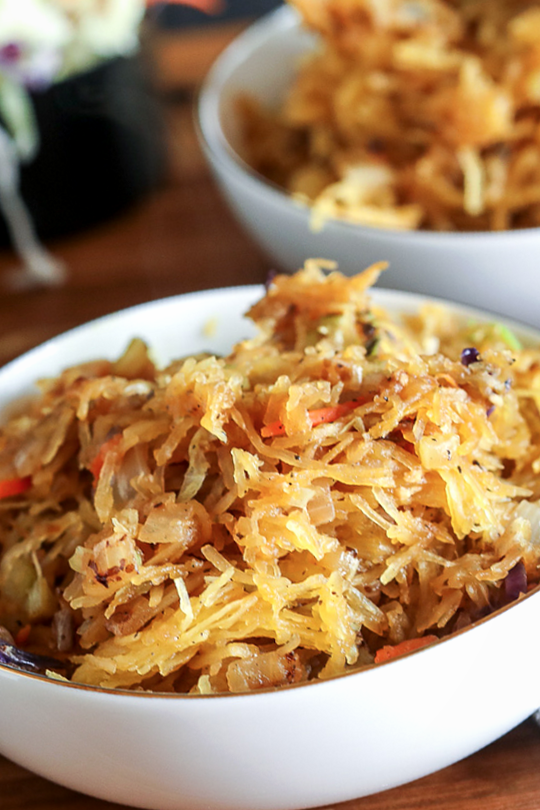
List of ingredients
- 1 large spaghetti squash
- 1/4 cup coconut aminos
- 3 cloves garlic, minced
- 1 tablespoon coconut sugar
- 2 teaspoons freshly grated ginger
- 1/4 teaspoon white pepper
- 2 tablespoons olive oil
- 1 onion, diced
- 3 stalks celery, sliced diagonally
- 2 cups cole slaw mix (shredded cabbage and carrots)
step-by-step instructions
- Step: Cut a spaghetti squash in half length wise and scoop out seeds. Lay skin side up in a 13 x 9 pyrex and pour 1/2 inch of water in the bottom of the pan. Bake at 400 degrees for 30-40 minutes, until flesh is very tender. Once done, scoop out flesh with a fork so it breaks apart into strings, set aside.
- Step: In a small bowl, whisk together coconut aminos, garlic, coconut sugar, ginger and white pepper; set aside.
- Step: Heat olive oil in a large skillet over medium high heat. Add onion and celery, and cook, stirring often, until tender, about 3-4 minutes. Stir in cabbage until heated through, about 1 minute.
- Step: Stir in spaghetti squash and sauce mixture until well combined, about 2 minutes.
- Step: Serve immediately.
Refining your stir-fry technique
Why high-heat searing matters for vegetables
Cooking your vegetables over medium-high heat is essential to achieve a professional stir-fry texture. If the heat is too low, the onions and celery will steam rather than sear, leading to a mushy consistency. A quick, high-heat sear ensures the edges of the vegetables become tender while the centers stay crisp, mimicking the authentic feel of traditional takeout dishes.
Selecting the right squash
Choose a spaghetti squash that feels firm and heavy for its size, indicating high water content and fresh, stringy flesh. Avoid squash with soft spots, deep cracks, or significant bruising, as these can affect the overall flavor and structure of the dish. A properly matured squash will yield long, smooth strands rather than clumps of mushy fibers when scraped with a fork.
Customizing your vegetable blend
Incorporating extra protein sources
If you wish to increase the heartiness of this meal, consider adding cubed extra-firm tofu or sliced tempeh to the skillet during the initial sautéing phase. These plant-based proteins absorb the savory sauce exceptionally well and provide a dense texture that pairs perfectly with the light squash strands. Ensure the protein is patted dry before hitting the pan to ensure a nice golden brown surface.
Adding more color with seasonal vegetables
For additional visual appeal and nutritional variety, consider adding sliced bell peppers or snap peas to the mix. These vegetables cook at a similar speed to the cabbage and celery, making them perfect additions without requiring extra steps. For a touch of color, a handful of thinly sliced red cabbage provides a vibrant contrast to the golden yellow squash.
Serving suggestions for balanced meals
Pairing with grain-free sides
While this dish is substantial on its own, it pairs wonderfully with sides that complement the Asian-inspired flavor profile. Consider serving this alongside smashed cucumber salad tossed in rice vinegar or a side of lightly steamed bok choy finished with a drizzle of sesame oil. These pairings enhance the fresh, clean aesthetic of the meal without adding heavy carbohydrates.
Enhancing the finish
Top your serving with fresh cilantro, sliced green onions, or toasted sesame seeds for an immediate boost in aroma and texture. These simple garnishes provide a bright, finishing touch that balances the savory, fermented notes of the coconut aminos. If you enjoy a bit more heat, a sprinkle of red chili flakes adds a nice punch that cuts through the subtle sweetness of the coconut sugar.
Managing leftovers and freshness
Best practices for immediate consumption
This dish is specifically designed to be enjoyed immediately after preparation, as the water content in the squash can release over time. Storing the dish for long periods often results in a texture that is less crisp and more watery. If you must have leftovers, keep the sauce, roasted squash, and sautéed vegetables separate in the refrigerator and combine them only when you are ready to reheat the meal.
Reviving the texture
If you find your reheated dish has become too liquid, you can fix it by returning the mixture to a hot, dry skillet for a minute. The high heat will evaporate the excess moisture released by the squash and vegetables. Avoid using a microwave to reheat, as this method accelerates the breakdown of the vegetable fibers, leading to a soggy result.
Common preparation questions
How can I ensure the squash strands are long and not mushy?
The key to perfect strands is avoiding overcooking the squash in the oven. Test the squash by pressing the skin; if it yields easily but is not falling apart, it is ready to be pulled from the oven. Raking the squash with a fork in long, sweeping motions from the outer edge toward the center will yield the longest strands.
Is it possible to make this dish without white pepper?
White pepper has a very distinct, earthy heat that is central to many traditional stir-fry recipes, but black pepper is a perfectly acceptable substitute. Keep in mind that black pepper will contribute visible dark specks to your sauce and a slightly sharper, more pungent flavor profile. If you are sensitive to heat, you can reduce the amount of pepper by half or omit it entirely without compromising the structural integrity of the recipe.
How can I thicken the sauce if it appears too thin?
Because this recipe relies on a simple sauce, it is meant to have a light coating rather than a thick, syrupy glaze. However, if you prefer a thicker consistency, you can stir in a small amount of arrowroot starch or cornstarch mixed with a splash of water. Add this slurry during the final minute of cooking, and the sauce will thicken instantly as it comes into contact with the heat of the skillet.
Can the coconut sugar be replaced?
Coconut sugar is used for its gentle, caramel-like sweetness that complements the coconut aminos. If you do not have it, brown sugar works as an effective alternative, as it offers a similar depth of flavor. Avoid using granulated white sugar if possible, as it lacks the molasses notes that help round out the savory, salty elements of the sauce.
What is the benefit of slicing the celery diagonally?
Slicing celery on a bias, or diagonally, increases the surface area of each slice. This allows the vegetable to cook more evenly and pick up more of the flavorful sauce in the skillet. Furthermore, this technique provides a more refined aesthetic, contributing to the overall visual presentation of the meal, making the dish look as good as it tastes.
Why should I use fresh ginger instead of powdered?
Fresh ginger contains volatile oils and aromatic compounds that provide a sharp, bright, and clean heat that is entirely absent in dried, powdered ginger. When using fresh ginger, you are adding not only flavor but also a fresh fragrance that helps elevate the entire dish. Grating the ginger finely ensures it distributes evenly throughout the sauce, preventing any overpowering bites of fiber.
Print Spaghetti Squash Chow Mein
- Total Time: 60 minutes
- Yield: 4 servings 1x
- Diet: Paleo, Whole30, Vegetarian, Vegan
Description
Discover a healthier twist with our Spaghetti Squash Chow Mein recipe! Low-carb, flavorful, and easy to make. Perfect for a nutritious meal.
Ingredients
- 1 large spaghetti squash
- 1/4 cup coconut aminos
- 3 cloves garlic, minced
- 1 tablespoon coconut sugar
- 2 teaspoons freshly grated ginger
- 1/4 teaspoon white pepper
- 2 tablespoons olive oil
- 1 onion, diced
- 3 stalks celery, sliced diagonally
- 2 cups cole slaw mix (shredded cabbage and carrots)
Instructions
- Step: Cut a spaghetti squash in half length wise and scoop out seeds. Lay skin side up in a 13 x 9 pyrex and pour 1/2 inch of water in the bottom of the pan. Bake at 400 degrees for 30-40 minutes, until flesh is very tender. Once done, scoop out flesh with a fork so it breaks apart into strings, set aside.
- Step: In a small bowl, whisk together coconut aminos, garlic, coconut sugar, ginger and white pepper; set aside.
- Step: Heat olive oil in a large skillet over medium high heat. Add onion and celery, and cook, stirring often, until tender, about 3-4 minutes. Stir in cabbage until heated through, about 1 minute.
- Step: Stir in spaghetti squash and sauce mixture until well combined, about 2 minutes.
- Step: Serve immediately.
Notes
For best results, serve this dish immediately. Spaghetti squash does not hold up well when stored in the refrigerator.
- Prep Time: 15 minutes
- Cook Time: 45 minutes
- Category: Main Course
- Method: Stir-fry and Bake
- Cuisine: Asian-Inspired
Nutrition
- Serving Size: 1 serving
- Calories: 145 kcal
- Sugar: 6 g
- Sodium: 380 mg
- Fat: 8 g
- Saturated Fat: 1 g
- Unsaturated Fat: 7 g
- Trans Fat: 0 g
- Carbohydrates: 19 g
- Fiber: 4 g
- Protein: 3 g
- Cholesterol: 0 mg
Leave a Reply