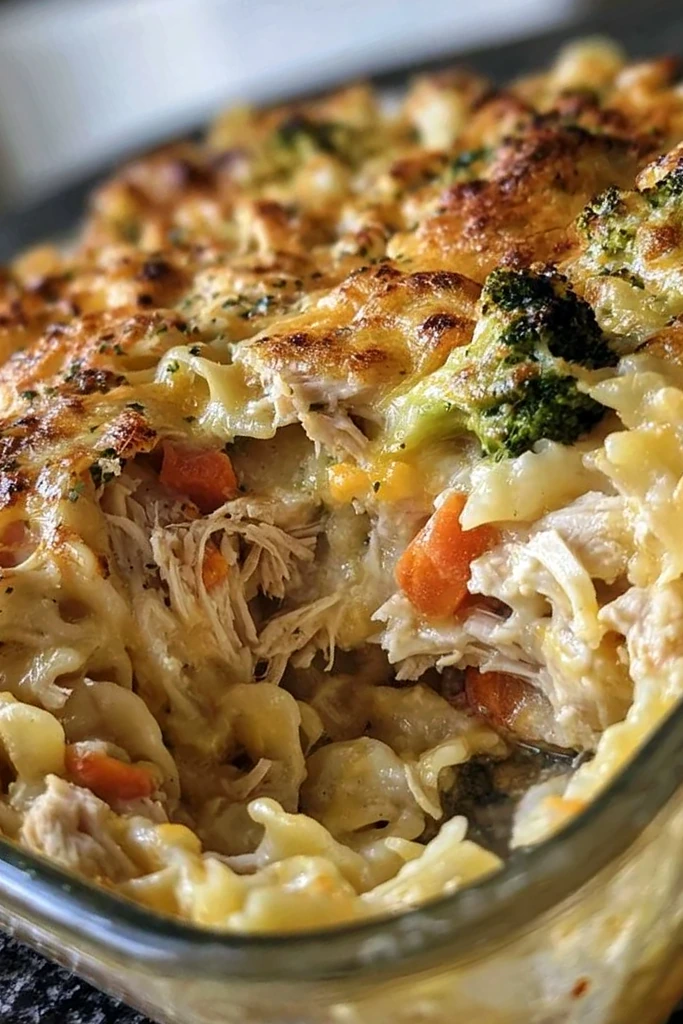
This nutritious rotisserie chicken casserole is designed for efficiency and flavor, making it an ideal choice for weeknight dinners. By combining pre-cooked chicken with fresh vegetables and a creamy sauce, you get a comforting meal in under an hour.
List of ingredients
- 2 cups shredded rotisserie chicken – pre-cooked and shredded for convenience.
- 1 cup chopped broccoli – use fresh florets for the best texture.
- 1 cup diced carrots – cut into small, even pieces for consistent cooking.
- 1/2 cup diced onions – finely chopped to blend into the sauce.
- 1 cup low-fat milk – provides a creamy base without excess calories.
- 1/2 cup shredded low-fat cheese – choose a variety that melts smoothly.
- 1 tsp garlic powder – adds a savory, aromatic depth.
- 1 tsp black pepper – provides a mild, spicy warmth.
- 1 tsp salt – enhances the natural flavors of the chicken and vegetables.
step-by-step instructions
- Prepare the oven: Preheat your oven to 375°F. Ensure the oven rack is in the center position for even heat distribution.
- Combine base ingredients: In a large mixing bowl, combine the shredded rotisserie chicken, chopped broccoli, diced carrots, and diced onions. Toss them gently to ensure the vegetables are evenly distributed.
- Create the sauce: In a separate mixing bowl, whisk together the low-fat milk, shredded low-fat cheese, garlic powder, black pepper, and salt until the mixture is well combined.
- Coat the mixture: Pour the prepared sauce over the chicken and vegetable mixture. Fold everything together with a spatula until every piece is thoroughly coated.
- Transfer to dish: Pour the mixture into a greased baking dish. Spread the ingredients evenly to ensure the casserole cooks uniformly.
- Bake: Place the dish in the oven and bake for 25 minutes. Remove when the sauce is bubbly and the top is lightly golden.
Optimizing Your Baking Technique
Maintain Uniform Vegetable Sizes
Cutting your carrots and broccoli into small, consistent pieces ensures they cook at the same rate. If the pieces are too large, they may remain crunchy while the chicken overcooks. Aim for bite-sized chunks to keep the texture balanced.
Temper Cold Chicken Before Mixing
If your rotisserie chicken is coming straight from the refrigerator, warm it slightly in the microwave for 20-30 seconds. This helps the milk-based sauce absorb more effectively and ensures the entire dish reaches the safe internal temperature faster.
Prevent Sticking With Proper Greasing
Lightly coat your baking dish with non-stick spray or a small amount of vegetable oil before adding the mixture. This prevents the cheese from sticking to the edges and makes serving much easier. It also helps in cleaning the dish after the meal.
Manage Oven Hot Spots
Every oven has areas that heat more quickly than others. If you notice one side of your casserole browning faster than the rest, rotate the pan 180 degrees halfway through the baking time. This ensures a consistent golden-brown finish across the top.
Allow the Dish to Rest
Let the casserole sit for five to ten minutes after removing it from the oven. This resting period allows the sauce to thicken and set, which prevents the dish from appearing runny when served. It also makes slicing the portions much cleaner.
Ingredient Substitutions and Adaptations
Using Turkey Instead of Chicken
Cooked turkey breast is an excellent substitute for rotisserie chicken. Shred the turkey in the same manner and follow the rest of the recipe exactly. The flavor profile remains very similar, making it a great way to use holiday leftovers.
Dairy-Free Milk Alternatives
For a dairy-free version, replace the low-fat milk with unsweetened almond, soy, or oat milk. These plant-based options maintain the creaminess of the sauce without adding a strong distinct flavor. Ensure the milk is unsweetened to avoid an accidental sweet taste.
Incorporating Vegan Cheese Options
Swap the shredded low-fat cheese for a plant-based cheese alternative or a tablespoon of nutritional yeast. Nutritional yeast provides a savory, nutty, and cheesy flavor that pairs well with broccoli and carrots. Adjust the salt levels if your vegan cheese is already heavily salted.
Handling Frozen Vegetables
If using frozen broccoli or carrots, thaw them completely and squeeze out any excess moisture using a clean kitchen towel. Excess water from frozen produce can dilute the sauce and lead to a soggy casserole. Patting them dry ensures the creamy consistency is preserved.
Grated Carrots for a Softer Profile
Instead of dicing the carrots, you can grate them using a box grater. Grated carrots cook faster and blend more seamlessly into the creamy sauce. This is a great option for children who prefer a less chunky texture in their meals.
Flavor Variations and Customizations
Adding a Spicy Element
Stir in a teaspoon of smoked paprika or a pinch of cayenne pepper into the sauce for a deeper, spicier profile. You can also fold in diced jalapeños with the vegetables for a fresh heat. Top the dish with pepper jack cheese for an integrated spicy kick.
Mediterranean Style Twist
Replace the garlic powder with dried oregano and stir in chopped sun-dried tomatoes and fresh basil. This transforms the dish into a Mediterranean-inspired bake. You can also use a sprinkle of feta cheese on top for a salty, tangy finish.
South Asian Inspired Flavors
Add a teaspoon of mild curry powder to the milk mixture and swap the broccoli for green peas. This combination creates a warm, aromatic dish reminiscent of a korma. Serve it with basmati rice for a complete meal experience.
Creating a Kid-Friendly Mild Version
Reduce the amount of garlic powder and use a very mild cheese like mozzarella or mild provolone. These cheeses melt exceptionally well and have a creamy taste that appeals to picky eaters. Avoid adding black pepper if the children are sensitive to spice.
Adding a Crunchy Breadcrumb Topping
Mix a quarter cup of Panko breadcrumbs with a teaspoon of melted butter and sprinkle it over the top before baking. This adds a contrasting crunch to the creamy interior of the casserole. For a gluten-free version, use crushed almond flour or gluten-free crackers.
Serving and Pairing Suggestions
Fresh Side Salad Pairings
A crisp green salad with a lemon-based vinaigrette provides a sharp contrast to the richness of the cheese sauce. Use mixed greens, sliced cucumbers, and cherry tomatoes to add freshness to the plate. The acidity of the dressing helps cleanse the palate between bites.
Warm Bread Accompaniments
Serve the casserole with warm dinner rolls or a slice of toasted rustic sourdough bread. The bread is perfect for soaking up the extra creamy sauce left on the plate. Garlic bread is also a popular choice that complements the garlic powder in the recipe.
Light Beverage Pairings
Pair this meal with a chilled sparkling water infused with lemon or lime to keep the meal feeling light. A glass of unsweetened iced tea also works well, as the tannins in the tea cut through the creaminess of the cheese. For a warm option, an herbal infusion is a cozy choice.
Balanced Dessert Options
Finish the meal with a light dessert such as a fruit crumble or a bowl of mixed berries with a dollop of Greek yogurt. A citrus sorbet is another excellent choice, as the acidity refreshes the mouth after the savory flavors of the casserole. Keep the dessert light to maintain the healthy nature of the dinner.
Plating for Visual Appeal
Scoop the casserole into shallow bowls and garnish with a sprinkle of fresh chopped parsley or chives. The bright green color of the herbs contrasts beautifully with the creamy sauce and orange carrots. Using a colorful ceramic bowl can make the simple meal feel more intentional.
Storage, Freezing, and Reheating
Proper Refrigeration Method
Store leftover casserole in an airtight glass or plastic container in the refrigerator for up to four days. Ensure the food has cooled slightly before sealing to prevent excessive condensation from forming inside the container. This helps maintain the texture of the vegetables.
Freezing Unbaked Casseroles
You can assemble the casserole in a freezer-safe dish and freeze it before baking for up to three months. Wrap the dish tightly with foil and plastic wrap to prevent freezer burn. Thaw the dish in the refrigerator overnight before placing it in the oven to bake.
Oven Reheating for Best Texture
To maintain the best consistency, reheat individual portions in a 350°F oven for about 15 minutes. This method prevents the sauce from separating and keeps the top from becoming too soft. Cover the portion with foil to retain moisture during the process.
Microwave Reheating Tips
If you are in a rush, microwave the casserole in 30-second intervals, stirring gently in between. Place a damp paper towel over the dish to create a steam effect, which prevents the chicken from drying out. Avoid overheating, as this can cause the cheese sauce to break.
Managing Leftover Liquid
If you notice liquid pooling at the bottom of the dish after refrigeration, do not worry. Gently stir the casserole before reheating to re-incorporate the moisture into the sauce. If it remains too watery, you can simmer it in a skillet for a few minutes to reduce the liquid.
Common Troubleshooting and FAQs
Can I use cold rotisserie chicken?
Yes, cold chicken works perfectly well in this recipe. However, warming it for a few seconds in the microwave ensures it integrates better with the milk and cheese sauce, leading to a more uniform heat distribution during the baking process.
What cheese melts best in this dish?
Low-fat mozzarella and mild cheddar are the best options for a smooth melt. If you prefer a sharper taste, an extra-sharp cheddar works well, though it may not be as creamy as mozzarella. Always use shredded cheese for the fastest melting time.
How do I stop the casserole from becoming watery?
The most common cause of wateriness is excess moisture from the vegetables. Ensure you drain chopped broccoli and carrots well, especially if using frozen varieties. Additionally, avoid overfilling the pan, which allows steam to escape more easily during baking.
Why is my sauce not thickening?
If the sauce is too thin, you can bake the dish for an additional 5-10 minutes without a cover. Alternatively, you can whisk a small amount of cornstarch or flour into the milk before mixing it with the other ingredients to provide more structure to the sauce.
Can this be made in a slow cooker?
Yes, you can adapt this for a slow cooker by reducing the milk by a quarter cup to prevent it from becoming too liquid. Cook on low for 4-6 hours or on high for 2-3 hours. Note that the top will not brown unless you transfer it to the oven for a final broil.
Print Quick Healthy Rotisserie Chicken and Vegetable Bake
- Total Time: 35 minutes
- Yield: 4 servings 1x
- Diet: Gluten-Free, Dairy-Light
Description
A comforting and quick casserole made with rotisserie chicken, broccoli, carrots, and cheese, perfect for busy weeknights.
Ingredients
- 2 cups shredded rotisserie chicken
- 1 cup chopped broccoli
- 1 cup diced carrots
- 1/2 cup diced onions
- 1 cup low-fat milk
- 1/2 cup shredded low-fat cheese
- 1 tsp garlic powder
- 1 tsp black pepper
- 1 tsp salt
Instructions
- Preheat: Preheat oven to 375°F.
- Combine: Mix chicken, broccoli, carrots, and onions in a bowl.
- Mix Sauce: In a separate bowl, combine milk, cheese, garlic powder, pepper, and salt.
- Coat: Pour the sauce over the chicken and vegetables.
- Transfer: Transfer to a greased baking dish and spread evenly.
- Bake: Bake for 25 minutes or until bubbly.
Notes
Use fresh or leftover chicken and adjust cheese for preference. Let rest before slicing for better serving consistency.
- Prep Time: 10 minutes
- Cook Time: 25 minutes
- Category: Casserole
- Method: Baking
- Cuisine: Comfort Fusion
Nutrition
- Serving Size: 1 cup
- Calories: 320 kcal
- Sugar: 5 g
- Sodium: 600 mg
- Fat: 14 g
- Saturated Fat: 6 g
- Unsaturated Fat: 8 g
- Trans Fat: 0 g
- Carbohydrates: 12 g
- Fiber: 3 g
- Protein: 28 g
- Cholesterol: 70 mg
Leave a Reply