These Thai-inspired peanut chicken lettuce wraps offer a fresh, low-carb alternative to traditional tacos. They combine savory peanut sauce with tender chicken and crunchy vegetables for a balanced meal ready in under 40 minutes.
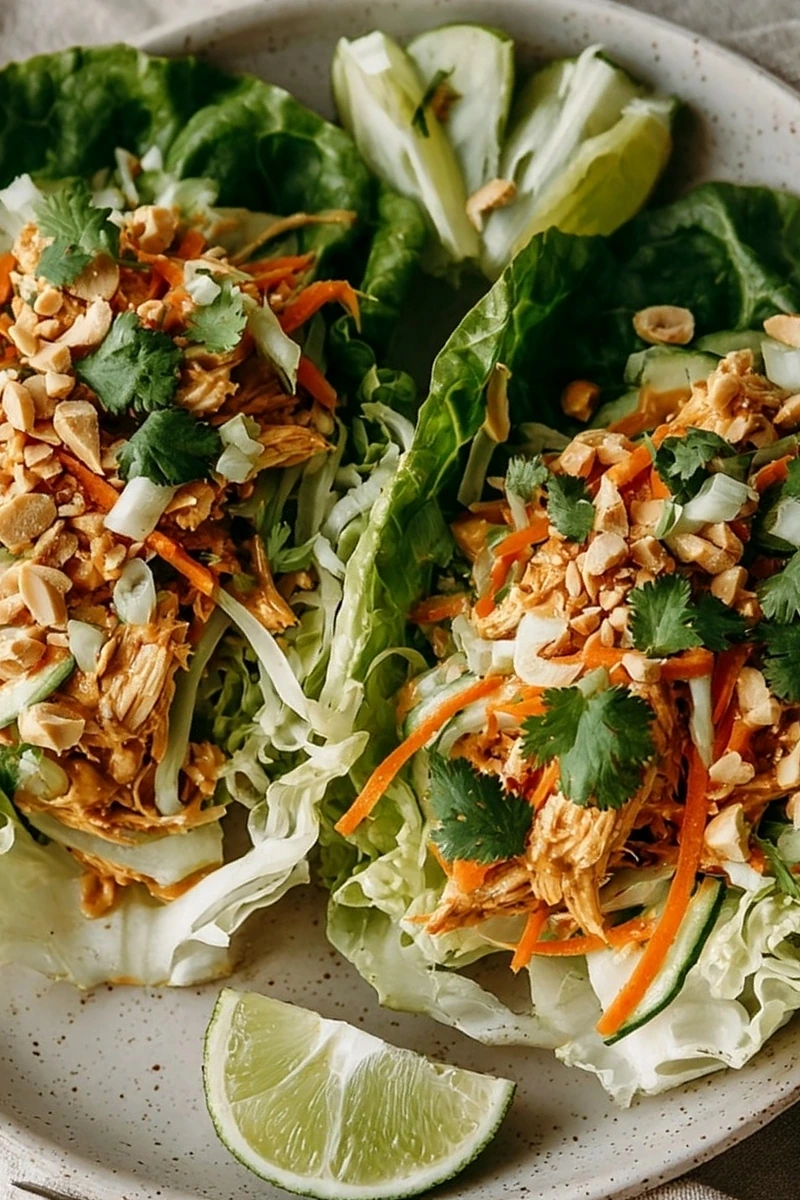
List of ingredients
- 1 pound boneless, skinless chicken breasts or thighs, sliced into strips – use thighs for more moisture.
- 1 tablespoon vegetable oil – for searing the chicken.
- Salt, to taste – enhances all flavors.
- Black pepper, to taste – adds a mild spicy note.
- 1/3 cup creamy peanut butter – the base for the rich sauce.
- 2 tablespoons soy sauce – provides umami; use gluten-free tamari if needed.
- 1 tablespoon lime juice – adds essential acidity and brightness.
- 1 tablespoon honey – provides a subtle sweet balance.
- 1 tablespoon rice vinegar – adds a sharp, clean tang.
- 1 teaspoon sesame oil – for a deep, toasted nut aroma.
- 2 teaspoons sriracha or chili garlic sauce, to taste – controls the heat level.
- 2 tablespoons warm water – thins the sauce for better coating.
- 12 large butter lettuce leaves, washed and dried – serves as the natural wrap.
- 1 medium carrot, julienned – adds sweetness and crunch.
- 1 small cucumber, julienned – provides a cooling contrast.
- 2 spring onions, thinly sliced – adds a mild onion bite.
- 2 tablespoons roasted peanuts, chopped – adds texture and roasted flavor.
- Fresh cilantro leaves, for garnish – provides a citrusy herbal finish.
- Lime wedges, for serving – for a final splash of acidity.
step-by-step instructions
- Prepare the sauce: In a medium mixing bowl, whisk together the peanut butter, soy sauce, lime juice, honey, rice vinegar, sesame oil, sriracha, and warm water. Stir until the mixture is completely smooth and the peanut butter is fully integrated.
- Sear the chicken: Heat the vegetable oil in a large skillet over medium-high heat. Season the chicken strips with salt and black pepper. Add them to the pan and cook for 6 to 8 minutes, stirring occasionally, until the chicken is lightly browned and cooked through.
- Glaze the meat: Reduce the skillet heat to low. Pour the prepared peanut sauce over the browned chicken. Toss the meat continuously for 2 to 3 minutes until the sauce thickens and glazes every piece of chicken.
- Arrange the wraps: Place the cleaned butter lettuce leaves on a platter or serving plates. Spoon a generous portion of the peanut chicken mixture into the center of each leaf.
- Add fresh toppings: Top each wrap with julienned carrots, julienned cucumbers, sliced spring onions, chopped roasted peanuts, and fresh cilantro leaves.
- Final touch: Serve the wraps immediately with lime wedges on the side, encouraging guests to squeeze fresh lime over the filling before eating.
Pro Tips for Optimal Texture
To prevent the lettuce wraps from becoming soggy, ensure the leaves are completely dry after washing. Use a salad spinner or pat them thoroughly with paper towels. Moisture on the leaf prevents the chicken from sitting securely and dilutes the sauce flavor.
When browning the chicken, avoid overcrowding the skillet. If the pan is too full, the chicken will steam in its own juices rather than searing. Work in two batches if necessary to achieve those golden-brown edges that add depth to the dish.
The temperature of the warm water used in the sauce is important. Warm water helps the peanut butter emulsify more quickly with the soy sauce and honey. This ensures a silky texture without lumps of peanut butter in the final glaze.
Dietary Substitutions and Protein Swaps
If you prefer a different protein, shrimp or firm tofu are excellent alternatives. For shrimp, sear them for only 2 minutes per side before adding the sauce to avoid overcooking. For tofu, press the block first to remove excess water, cube it, and fry until golden before glazing.
To make this recipe nut-free, replace the peanut butter with sunflower seed butter or tahini. While the flavor profile will shift, the creaminess remains similar. Use toasted sunflower seeds or sesame seeds instead of roasted peanuts for the garnish.
For those avoiding soy, coconut aminos are a direct replacement for soy sauce. They provide a similar salty and sweet profile but are naturally soy-free and gluten-free. This keeps the flavor authentic while accommodating dietary restrictions.
Customizing Your Vegetable Toppings
While carrots and cucumbers are classic, you can vary the crunch with other vegetables. Shredded purple cabbage adds a vibrant color and a slightly peppery taste. Red bell pepper strips offer a sweet, crisp element that pairs well with the peanut sauce.
For a summer variation, try adding thinly sliced radishes or snap peas. These provide a sharp, fresh snap that cuts through the richness of the peanut butter. Consider using a mix of herbs, such as mint or Thai basil, alongside the cilantro for more complexity.
If butter lettuce is unavailable, Romaine hearts or iceberg lettuce are sturdy alternatives. Romaine provides a more substantial crunch, while iceberg offers a cleaner, more neutral taste. Ensure the leaves are small enough to be manageable as wraps.
Serving and Presentation Ideas
For a dinner party, present the components as a DIY station. Place the warm peanut chicken in a central bowl and arrange the lettuce leaves and toppings in smaller bowls around it. This allows guests to customize their wraps based on their spice and vegetable preferences.
Pair these wraps with a side of steamed jasmine rice or a cold sesame noodle salad. The neutrality of the rice helps balance the intense flavors of the peanut sauce. A simple slaw made with vinegar and lime also complements the meal well.
When plating, focus on the contrast of colors. The bright orange of the carrots, the deep green of the cilantro, and the white of the cucumber make the dish visually appealing. Adding a final drizzle of extra peanut sauce over the top can enhance the look.
Storage and Preservation Guide
To maintain the best quality, store the cooked peanut chicken separately from the fresh vegetables. Place the chicken in an airtight container and refrigerate for up to three days. Keep the julienned vegetables in a separate container with a damp paper towel to keep them crisp.
Do not assemble the wraps in advance. The salt and acidity in the peanut sauce will cause the lettuce to wilt and release water. Only fill the lettuce leaves immediately before serving to ensure a crisp bite.
If you have leftover sauce that hasn’t touched the meat, it can be stored in the fridge for up to a week. It can be used as a dip for raw vegetables or as a dressing for a cold noodle salad.
Reheating Instructions
The best way to reheat the peanut chicken is on the stovetop over low heat. Add a tablespoon of water or broth to the pan to loosen the sauce, which may have thickened in the fridge. Stir gently until the chicken is warmed through.
If using a microwave, heat the chicken in short 30-second intervals. Stir between each session to ensure even heating and to prevent the peanut butter from separating. Avoid overheating, as this can make the chicken rubbery.
Once the chicken is reheated, spoon it into fresh, cold lettuce leaves. Never microwave the lettuce or the fresh vegetable toppings, as this destroys the texture and temperature contrast that makes the dish successful.
Make-Ahead Preparation Strategy
You can prepare the peanut sauce up to 24 hours in advance. Store it in a sealed jar in the refrigerator and give it a vigorous shake or whisk before using. If the sauce becomes too thick, stir in a teaspoon of warm water.
Julienning the carrots and cucumbers can also be done a day early. Store them in airtight containers with a small amount of water or a damp paper towel to maintain their rigidity. This significantly reduces the active prep time on the day of serving.
The chicken can be sliced and seasoned in advance and stored in the fridge. Ensure the chicken is patted dry before adding it to the hot oil to prevent splashing and to ensure a better sear.
Troubleshooting Common Issues
If the peanut sauce is too thick to pour, gradually add warm water one teaspoon at a time. Whisk thoroughly after each addition until the sauce reaches a pourable, glaze-like consistency that coats the chicken evenly.
If the chicken is browning too quickly but remains raw in the center, lower the heat to medium. This allows the interior to cook through without burning the exterior. Using evenly sliced strips of meat helps ensure uniform cooking times.
If the sauce tastes too salty, add a squeeze of extra lime juice or a small amount of honey. The acidity and sweetness will help neutralize the saltiness of the soy sauce and peanut butter.
Frequently Asked Questions
Can I use creamy or crunchy peanut butter? Both work, but creamy peanut butter creates a smoother, more professional glaze. If you use crunchy, the peanut bits will add a bit more texture to the sauce itself.
Is this recipe suitable for meal prep? Yes, the chicken and sauce are excellent for meal prep. Just store the lettuce and fresh toppings separately and assemble them at the time of consumption.
How can I make the wraps spicier? Increase the amount of sriracha or add a pinch of crushed red pepper flakes during the chicken searing process. You can also add sliced fresh bird’s eye chilies to the toppings for a sharp heat.
Can I use chicken thighs instead of breasts? Yes, boneless skinless chicken thighs are often preferred because they stay juicier under high heat. They provide a richer flavor that pairs exceptionally well with the nuttiness of the sauce.
Print Thai Peanut Chicken Lettuce Wraps
- Total Time: 35 minutes
- Yield: 4 portions 1x
- Diet: Low Carb
Description
Juicy chicken and peanut sauce fill crisp lettuce, finished with fresh veggies and crunchy peanuts.
Ingredients
- 1 pound boneless, skinless chicken breasts or thighs, sliced into strips
- 1 tablespoon vegetable oil
- Salt, to taste
- Black pepper, to taste
- 1/3 cup creamy peanut butter
- 2 tablespoons soy sauce
- 1 tablespoon lime juice
- 1 tablespoon honey
- 1 tablespoon rice vinegar
- 1 teaspoon sesame oil
- 2 teaspoons sriracha or chili garlic sauce
- 2 tablespoons warm water
- 12 large butter lettuce leaves, washed and dried
- 1 medium carrot, julienned
- 1 small cucumber, julienned
- 2 spring onions, thinly sliced
- 2 tablespoons roasted peanuts, chopped
- Fresh cilantro leaves, for garnish
- Lime wedges, for serving
Instructions
- Make Sauce: In a medium mixing bowl, whisk peanut butter, soy sauce, lime juice, honey, rice vinegar, sesame oil, sriracha, and warm water until smooth. Set aside.
- Cook Chicken: Heat vegetable oil in a large skillet over medium-high heat. Season the chicken strips with salt and black pepper. Add the chicken to the skillet and cook for 6 to 8 minutes, stirring occasionally, until fully cooked and lightly browned.
- Glaze: Reduce heat to low. Pour prepared peanut sauce over the cooked chicken. Toss well to coat all pieces and cook for an additional 2 to 3 minutes until heated through. Remove skillet from heat.
- Assemble: Arrange butter lettuce leaves on serving plates. Spoon peanut chicken mixture into each leaf.
- Garnish: Garnish each wrap with julienned carrot, cucumber, spring onions, chopped peanuts, and fresh cilantro.
- Serve: Present lettuce wraps immediately with lime wedges on the side for squeezing over the top.
Notes
High in protein and fiber. Store cooked peanut chicken filling in a sealed container in the fridge up to three days. Keep lettuce and veggies separate until serving to maintain crispness.
- Prep Time: 20 minutes
- Cook Time: 15 minutes
- Category: Dinner
- Method: Stir-fry
- Cuisine: Thai-Inspired
Nutrition
- Serving Size: 3 wraps
- Calories: 390 kcal
- Sugar: 9 g
- Sodium: 620 mg
- Fat: 22 g
- Saturated Fat: 5 g
- Unsaturated Fat: 17 g
- Trans Fat: 0 g
- Carbohydrates: 18 g
- Fiber: 4 g
- Protein: 31 g
- Cholesterol: 85 mg
Leave a Reply