This creamy pasta dish combines the bold flavors of a classic Philly cheesesteak with a high-protein twist. It is a fast, one-pan meal designed for busy weeknights when you need something comforting yet nourishing.
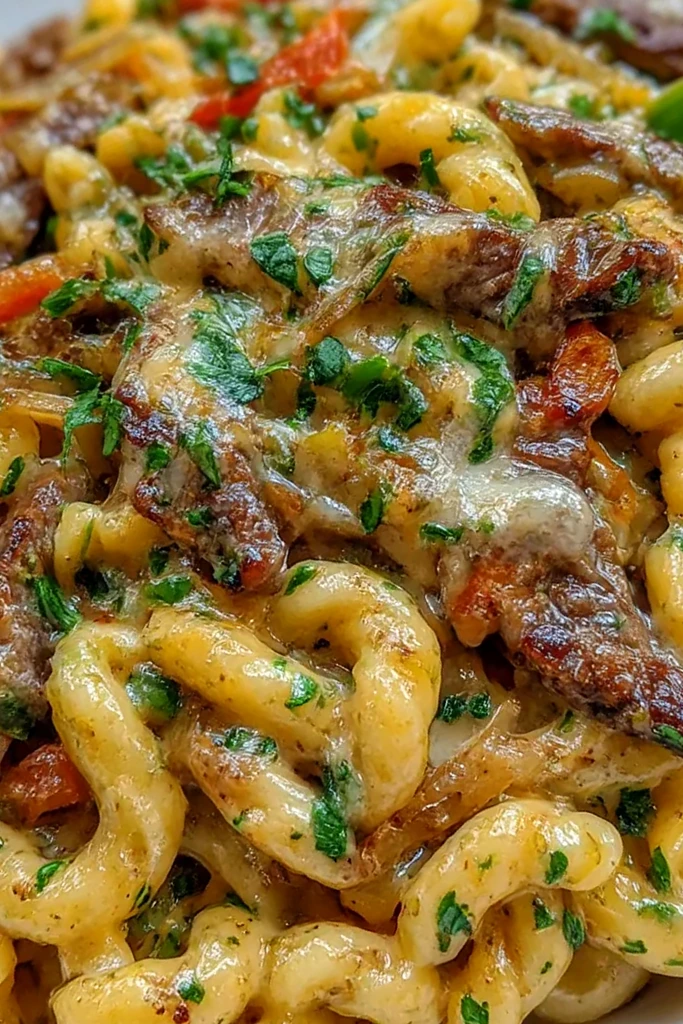
List of ingredients
- 8 oz high-protein pasta – provides a chewy texture and extra protein.
- 1 lb lean sirloin steak, thinly sliced – the primary protein source for a lean finish.
- 1 tbsp olive oil – used for searing the steak and sautéing vegetables.
- 1 small green bell pepper, thinly sliced – adds a mild sweetness and vibrant color.
- 1 small onion, thinly sliced – provides a savory, aromatic depth.
- 2 cloves garlic, minced – adds a punch of flavor to the vegetable base.
- 1 tsp Worcestershire sauce – contributes a salty, umami depth to the beef.
- 1/2 tsp salt – enhances the natural flavors of all components.
- 1/2 tsp black pepper – adds a subtle heat and aromatic spice.
- 1 cup low-fat milk – forms the base of the light and creamy sauce.
- 1 cup shredded provolone cheese – creates the signature Philly cheesesteak melt.
- 1/2 cup shredded mozzarella cheese – adds a gooey, stringy consistency.
- 2 oz light cream cheese – thickens the sauce and ensures a smooth texture.
step-by-step instructions
- Prepare the Pasta: Cook high-protein pasta according to package directions, then drain and set aside. Tip: Cook the pasta until just al dente to prevent it from becoming mushy when mixed with the sauce.
- Brown the Beef: Heat olive oil in a large skillet over medium-high heat, add sliced steak, and cook for 2 to 3 minutes until browned. Remove the meat from the pan and set it aside. Tip: Pat the steak dry with a paper towel before cooking to achieve a better sear.
- Sauté the Aromatics: In the same skillet, sauté the sliced bell pepper and onion for 4 to 5 minutes until softened. Add the minced garlic and cook for an additional 30 seconds. Tip: If the pan seems too dry, add a small splash of water to loosen the browned bits from the bottom.
- Season the Mixture: Return the browned steak to the skillet and stir in the Worcestershire sauce, salt, and black pepper. Tip: Mix quickly to ensure the meat is evenly coated without overcooking.
- Build the Creamy Base: Reduce the heat to medium and stir in the low-fat milk and light cream cheese until the mixture is smooth and slightly thickened. Tip: Stir constantly with a whisk or spatula to prevent the cream cheese from clumping.
- Melt the Cheeses: Stir in the shredded provolone and mozzarella until the cheeses are completely melted and creamy. Tip: Use freshly shredded cheese for a smoother melt and better consistency.
- Combine and Finish: Add the cooked pasta to the skillet and toss until evenly coated, cooking for 1 to 2 minutes until everything is heated through. Tip: If the sauce is too thick, stir in a tablespoon of reserved pasta water.
- Serve: Plate the pasta warm and garnish with extra cracked black pepper if desired. Tip: Serve immediately to maintain the ideal creamy texture of the cheese sauce.
Pro Tips for Optimal Texture
Searing Steak in Small Batches to Avoid Steaming
If your skillet is small, cook the steak in two separate batches. Overcrowding the pan lowers the temperature, causing the meat to steam in its own juices rather than brown, which results in a tougher texture.
Using Reserved Pasta Water for Sauce Adjustment
Always save a small cup of the starchy water used to boil the pasta. If the cheese sauce becomes too thick after adding the pasta, a splash of this water will emulsify the sauce and make it glossy again.
Selecting the Right Cut of Lean Sirloin
Choose top sirloin or flank steak for the best results in this recipe. These cuts are naturally lean and can be sliced very thin, which ensures they cook quickly and remain tender.
Managing Heat to Prevent Cheese Separation
Once you add the milk and cheeses, keep the heat at a medium or low setting. High heat can cause the fats in the cheese to separate, leading to a grainy or oily sauce rather than a smooth cream.
Patting Meat Dry for a Better Crust
Moisture on the surface of the steak creates steam when it hits the oil. By patting the meat dry with paper towels, you ensure a high-temperature sear that develops a savory brown crust.
Stirring Cream Cheese Thoroughly
Add the light cream cheese in small chunks or use a whisk to incorporate it into the milk. This prevents lumps and ensures the sauce has a professional, uniform consistency.
Ingredient Substitutions and Customizations
Using Chickpea Pasta for Extra Protein
Swap traditional high-protein wheat pasta for chickpea or lentil pasta to increase the protein and fiber content. These alternatives work well but may require a bit more sauce as they absorb more liquid.
Substituting Dairy-Free Cheese Alternatives
For a dairy-free version, use cashew-based cream and vegan shreds of provolone and mozzarella. Ensure you choose a brand that melts well to maintain the creamy feel of the original dish.
Swapping Steak for Lean Ground Turkey
If you prefer a different protein, lean ground turkey or thinly sliced chicken breast are excellent substitutes. Follow the same browning process, though turkey may require slightly more seasoning to match the beef’s depth.
Adding Mushrooms for Extra Umami
Incorporate sliced cremini or button mushrooms during the vegetable sauté step. Mushrooms add an earthy depth and bulk to the meal without significantly increasing the calorie count.
Incorporating Fresh Spinach for Added Nutrition
Stir in a few handfuls of fresh baby spinach just before adding the pasta. The heat from the sauce will wilt the spinach quickly, adding color and essential vitamins to the meal.
Increasing Heat with Red Pepper Flakes
To add a spicy kick, stir in a pinch of crushed red pepper flakes along with the garlic. This creates a subtle warmth that cuts through the richness of the cheese sauce.
Best Ways to Serve This Meal
Pairing with a Zesty Lemon Vinaigrette Salad
Serve this rich pasta alongside a light salad of mixed greens, cucumbers, and cherry tomatoes. A lemon-based vinaigrette provides a bright, acidic contrast that balances the creaminess of the cheesesteak mac.
Adding Tangy Pickle Spears as a Side
Classic dill pickle spears add a refreshing crunch and acidity. The vinegar in the pickles cleanses the palate between bites of the savory, cheesy pasta.
Choosing a Refreshing Beverage Pairing
Pair this meal with sparkling water flavored with lime or a chilled glass of unsweetened iced tea. These options provide a crisp finish without adding unnecessary sugars to a high-protein meal.
Garnishing with Freshly Chopped Chives
Sprinkle finely chopped chives or parsley over the top before serving. Fresh herbs add a pop of color and a mild onion-like brightness that enhances the presentation.
Serving with Roasted Zucchini for Balance
Sautéed or roasted zucchini slices make a great side dish. They add a soft texture and additional nutrients, making the meal feel more complete and balanced.
Storage and Reheating Guide
Refrigerating Leftovers in Airtight Containers
Store any remaining pasta in a sealed airtight container in the refrigerator for up to three days. This prevents the pasta from drying out and keeps the flavors fresh.
Reheating on the Stovetop for Best Quality
To maintain the creaminess, reheat the pasta in a skillet over low heat. Add a tablespoon of milk or water and stir gently until the cheese melts and the dish is heated through.
Using a Microwave for Quick Reheating
If using a microwave, heat the pasta in short 30-second intervals, stirring in between. Adding a tiny splash of water helps steam the pasta and prevents the cheese from becoming oily.
Freezing Considerations for Meal Prep
While this dish is best fresh, you can freeze it for up to a month. It is recommended to freeze the steak and vegetable mixture separately from the pasta to avoid a mushy texture upon thawing.
Make-Ahead Preparation Strategies
Pre-Slicing Vegetables for Faster Assembly
Slice the onions and bell peppers a day in advance and store them in a container. This reduces the active prep time on the night of cooking to just a few minutes.
Browning the Steak in Advance
You can sear the sirloin steak ahead of time and store it in the fridge. When you are ready to eat, simply return the cooked meat to the pan during the final assembly steps.
Batch Cooking for Weekly Lunches
Double the recipe to create several meal-prep portions. Divide the finished pasta into equal containers, allowing them to cool slightly before sealing and refrigerating.
Preparing Minced Garlic in Bulk
Mince a large amount of garlic and store it in a small jar covered in olive oil. This allows you to scoop out the exact amount needed for this recipe without the tedious chopping process.
Setting Up a Mise en Place Station
Arrange all measured ingredients on your counter before turning on the stove. Because this recipe moves quickly, having everything ready prevents the garlic or cheese from burning.
Common Troubleshooting Steps
Fixing a Grainy or Separated Cheese Sauce
If the sauce looks broken or grainy, it is usually due to excessive heat. Remove the pan from the burner and stir in a small amount of milk or heavy cream over very low heat to bring the emulsion back together.
Preventing the Steak from Becoming Tough
Ensure the pan is very hot before adding the meat and do not overcook it. Searing quickly on high heat and removing the meat immediately preserves the tenderness of the sirloin.
Adjusting a Sauce That is Too Salty
If the Worcestershire sauce or cheese makes the dish too salty, add a splash of unsalted milk or a squeeze of fresh lemon juice. The acidity and creaminess help neutralize the excess salt.
Dealing with Overcooked Pasta
If the pasta is too soft, avoid stirring it vigorously into the sauce. Gently fold it in at the very end and reduce the final heating time to avoid further breaking down the noodles.
Solving Clumpy Cream Cheese Issues
If the cream cheese won’t melt smoothly, try using a smaller piece and stirring it into the hot milk first. Once the cream cheese is fully liquid, add the shredded cheeses one by one.
Preventing Burned Garlic
Garlic burns much faster than onions and peppers. Always add the garlic in the final 30 seconds of the vegetable sauté to ensure it becomes fragrant without turning bitter.
Frequently Asked Questions
Can I use regular pasta instead of high-protein pasta?
Yes, you can use any pasta shape or brand. However, using regular pasta will lower the total protein count per serving, so you may want to add more steak to compensate.
How long do the leftovers stay fresh in the fridge?
The leftovers are safe to eat for up to three days when stored in an airtight container. Ensure the container is fully sealed to prevent the pasta from absorbing fridge odors.
Which steak cut works best for this recipe?
Lean sirloin is the ideal choice because it is tender and low in fat. Flank steak or skirt steak are also good alternatives as long as they are sliced thinly against the grain.
Can I make this dish with a different type of cheese?
While provolone is traditional for Philly style, you can use white cheddar or Monterey Jack. These will provide a similar melt and creaminess, though the flavor profile will change slightly.
Is it possible to make this recipe in a slow cooker?
This recipe is designed for a skillet to get the proper sear on the meat. While you can slow-cook the beef and vegetables, the pasta and cheese must be added at the end on the stove for the best texture.
How do I prevent the pasta from soaking up all the sauce?
Underook your pasta by one or two minutes. The pasta will finish cooking in the cheese sauce, absorbing a small amount of flavor without soaking up all the liquid and leaving the dish dry.
Print Savory High-Protein Philly Cheesesteak Pasta
- Total Time: 30 minutes
- Yield: 4 servings 1x
- Diet: Low Fat
Description
High-Protein Philly Cheesesteak Mac: Creamy, protein-packed comfort food with classic Philly flavors in a mac and cheese twist.
Ingredients
- 8 oz high-protein pasta
- 1 lb lean sirloin steak, thinly sliced
- 1 tbsp olive oil
- 1 small green bell pepper, thinly sliced
- 1 small onion, thinly sliced
- 2 cloves garlic, minced
- 1 tsp Worcestershire sauce
- ½ tsp salt
- ½ tsp black pepper
- 1 cup low-fat milk
- 1 cup shredded provolone cheese
- ½ cup shredded mozzarella cheese
- 2 oz light cream cheese
Instructions
- Step 1: Cook high-protein pasta according to package directions. Drain and set aside.
- Step 2: Heat olive oil in a large skillet over medium-high heat. Add sliced steak and cook 2 to 3 minutes until browned. Remove and set aside.
- Step 3: In the same skillet, sauté bell pepper and onion for 4 to 5 minutes until softened. Add garlic and cook 30 seconds.
- Step 4: Return steak to the skillet. Stir in Worcestershire sauce, salt, and black pepper.
- Step 5: Reduce heat to medium. Add milk and cream cheese, stirring until smooth and slightly thickened.
- Step 6: Stir in provolone and mozzarella until melted and creamy.
- Step 7: Add cooked pasta and toss until evenly coated. Cook 1 to 2 minutes until everything is heated through.
- Step 8: Serve warm with extra cracked pepper if desired.
Notes
Use extra-lean sirloin for the leanest dish. To reduce fat further, substitute part-skim cheese options or 1% milk. Want more veggies? Add mushrooms or extra peppers for color and texture. Leftovers can be stored in an airtight container for up to 3 days.
- Prep Time: 10 minutes
- Cook Time: 20 minutes
- Category: Main Dish
- Method: Skillet, Stovetop
- Cuisine: American
Nutrition
- Serving Size: 1 serving
- Calories: 480 kcal
- Sugar: 7 g
- Sodium: 950 mg
- Fat: 18 g
- Saturated Fat: 9 g
- Unsaturated Fat: 9 g
- Trans Fat: 0 g
- Carbohydrates: 32 g
- Fiber: 6 g
- Protein: 46 g
- Cholesterol: 95 mg
Leave a Reply