This nutrient-dense meal combines the bold flavors of a Philadelphia cheesesteak with a creamy pasta base. It is a fast, one-pan dinner that provides a significant amount of protein in under 30 minutes.
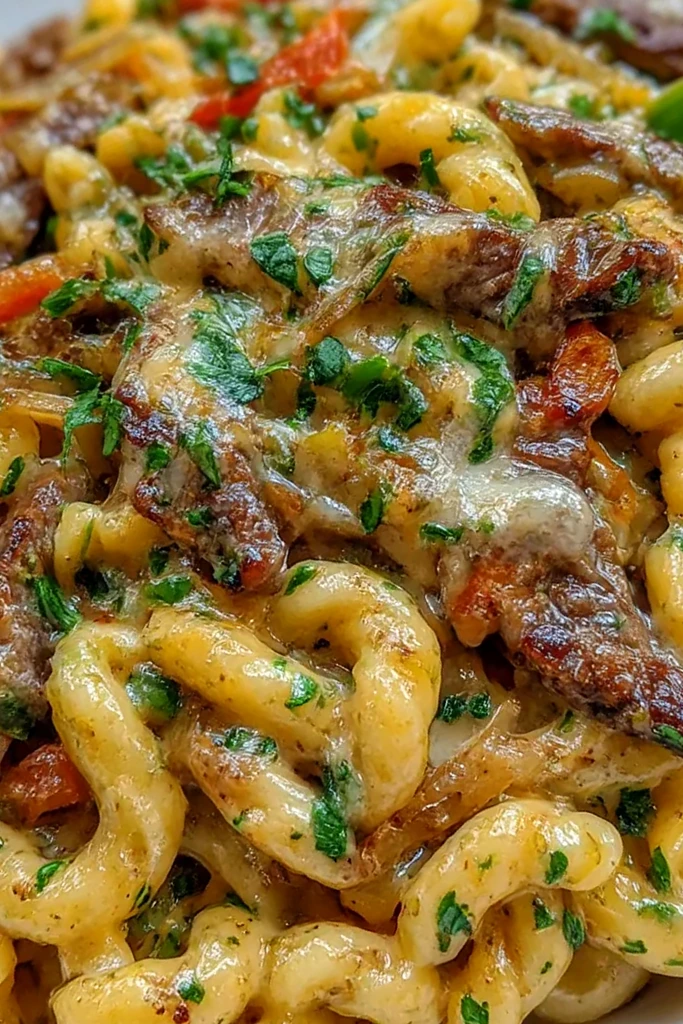
List of ingredients
- 8 oz high-protein pasta – use a chickpea or lentil-based variety for maximum protein.
- 1 lb lean sirloin steak – thinly sliced against the grain for tenderness.
- 1 tbsp olive oil – for searing the meat and sautéing vegetables.
- 1 small green bell pepper – thinly sliced to match the steak.
- 1 small onion – thinly sliced for flavor.
- 2 cloves garlic – minced finely.
- 1 tsp Worcestershire sauce – adds a savory, deep flavor profile.
- ½ tsp salt – to enhance all savory notes.
- ½ tsp black pepper – for a mild spicy kick.
- 1 cup low-fat milk – creates the base of the creamy sauce.
- 1 cup shredded provolone cheese – provides the traditional Philly taste.
- ½ cup shredded mozzarella cheese – adds stretch and creaminess.
- 2 oz light cream cheese – acts as a stabilizer for a smooth sauce.
step-by-step instructions
- Cook Pasta: Boil the high-protein pasta according to the package instructions. Drain the water and set the pasta aside.
- Sear Steak: Heat olive oil in a large skillet over medium-high heat. Add the sliced sirloin and cook for 2 to 3 minutes until browned. Remove the meat from the pan and set it aside on a plate.
- Sauté Vegetables: In the same skillet, add the sliced bell pepper and onion. Cook for 4 to 5 minutes until softened. Stir in the minced garlic and cook for an additional 30 seconds.
- Season Meat: Return the browned steak to the skillet with the vegetables. Stir in the Worcestershire sauce, salt, and black pepper until evenly distributed.
- Build Sauce: Lower the heat to medium. Pour in the low-fat milk and add the light cream cheese, stirring constantly until the mixture is smooth and slightly thickened.
- Melt Cheese: Stir in the shredded provolone and mozzarella. Continue stirring until the cheeses are completely melted and the sauce is creamy.
- Combine: Add the cooked pasta to the skillet. Toss the mixture until the pasta is evenly coated and heat for 1 to 2 minutes.
- Final Touch: Serve the dish immediately while warm. Garnish with extra cracked black pepper if desired.
Professional Searing and Sautéing Techniques
Pat Steak Dry Before Cooking
Use paper towels to remove excess moisture from the surface of the sirloin slices. Removing surface water prevents the meat from steaming in the pan, allowing it to achieve a deep brown crust through the Maillard reaction.
Slice Steak Against the Grain
Identify the muscle fibers of the sirloin and cut perpendicular to them. This shortens the fibers, making the meat much easier to chew and ensuring a tender result even with lean cuts.
Caramelize Vegetables for Depth
Allow the onions and peppers to sit undisturbed for a minute or two before stirring. This encourages browning and concentrates the natural sugars, providing a sweeter contrast to the savory cheese sauce.
Avoid Overcrowding the Skillet
Cook the steak in batches if the skillet is too small. Overcrowding drops the pan temperature and releases moisture, which leads to gray, boiled meat instead of seared, flavorful beef.
Ingredient Substitutions and Adaptations
High-Protein Pasta Alternatives
Swap wheat-based protein pasta for chickpea or red lentil pasta to increase fiber and protein. Be mindful that these pastas cook faster and can become mushy, so check them 2 minutes before the package suggests.
Alternative Lean Protein Options
Replace sirloin with thinly sliced chicken breast or turkey tenderloin for a different flavor profile. These meats require slightly shorter cooking times and pair well with the same provolone and mozzarella blend.
Dairy-Free Cheese Swaps
Use a combination of cashew-based cream cheese and vegan mozzarella to make the dish dairy-free. To maintain the thickness, you may need to add a teaspoon of cornstarch slurry to the plant-based milk.
Low-Sodium Flavor Enhancers
If reducing salt, replace the Worcestershire sauce with a squeeze of lemon juice and a dash of smoked paprika. This provides the necessary acidity and depth without adding excessive sodium.
Customizing Flavor and Texture
Adding Umami with Mushrooms
Sauté sliced cremini or button mushrooms along with the onions and peppers. Mushrooms add a meaty texture and a rich, earthy flavor that complements the beef and melted provolone.
Incorporating Fresh Leafy Greens
Stir in two cups of fresh baby spinach or chopped kale during the final minute of cooking. The residual heat will wilt the greens, adding color and micronutrients without altering the flavor.
Increasing Heat Levels
Add a pinch of red pepper flakes or a teaspoon of sriracha to the sauce while melting the cheeses. This adds a spicy layer that cuts through the richness of the cream and cheese.
Varying the Pepper Profile
Use a mix of red, yellow, and orange bell peppers for a more vibrant presentation. Different colored peppers offer slightly different sweetness levels, adding complexity to the vegetable base.
Serving Suggestions and Pairings
Pairing with Acidic Green Salads
Serve this rich pasta alongside a simple arugula salad with a lemon-olive oil vinaigrette. The acidity of the dressing helps cleanse the palate between bites of the creamy cheesesteak mac.
Adding Tangy Vegetable Sides
Accompany the meal with chilled pickle spears or pickled red onions. The vinegar-based tanginess balances the heavy fats from the cheese and cream cheese.
Garnishing with Fresh Herbs
Top the finished dish with freshly chopped parsley or chives. These herbs add a bright, fresh note and a pop of color to the golden-brown pasta.
Serving with Roasted Roots
Add a side of roasted carrots or zucchini to increase the vegetable volume. Roasting these vegetables at high heat preserves their structure and adds a charred flavor that fits the Philly theme.
Storage and Preservation Guidelines
Refrigeration Best Practices
Store leftovers in an airtight glass container in the refrigerator for up to three days. Glass containers help maintain the flavor and prevent the pasta from absorbing odors from other foods.
Preventing Sauce Separation
When storing, the sauce may thicken or separate slightly. Adding a small splash of milk or water before reheating helps the emulsion come back together for a creamy texture.
Freezing Components Separately
Avoid freezing the assembled pasta as the noodles often become grainy. Instead, freeze the cooked steak and vegetable mixture and the sauce separately, then combine them upon reheating.
Managing Pasta Texture During Storage
Undercook the pasta by one minute when planning for leftovers. This prevents the noodles from becoming overly soft when they are reheated in the cheese sauce.
Effective Reheating Methods
Stovetop Reheating for Maximum Creaminess
Place the leftovers in a skillet over low-medium heat. Add a tablespoon of milk and stir gently to loosen the sauce and return it to its original glossy consistency.
Microwave Heating Instructions
Heat the pasta in a microwave-safe bowl in 45-second intervals. Stir between each interval to ensure the cheese melts evenly and avoid hot spots in the center.
Oven Finishing for a Cheesy Crust
Transfer the pasta to an oven-safe dish and top with a thin layer of extra mozzarella. Broil for 2 to 3 minutes until the top is bubbly and golden brown.
Avoiding Overcooking During Reheat
Heat only until the center is warm. Overheating the dish can cause the cheese sauce to break, resulting in a greasy texture and tough pieces of steak.
Make-Ahead Preparation Tips
Advance Vegetable and Meat Prep
Slice the steak, onions, and peppers the night before and store them in separate containers. This reduces the actual cooking time to just the searing and assembling phases.
Pre-Cooking the Protein Pasta
Cook the pasta in advance and toss it with a drizzle of olive oil to prevent sticking. Store it in the fridge and add it to the skillet at the very end of the cooking process.
Creating a Pre-Mixed Cheese Blend
Combine the shredded provolone and mozzarella in a single bag. This allows you to dump the cheese into the sauce in one go, speeding up the melting process.
Preparing Minced Garlic in Bulk
Mince a whole head of garlic and store it in a small jar covered with olive oil. This ensures you have fresh, ready-to-use garlic for this recipe and other weeknight meals.
Troubleshooting Common Issues
Fixing a Sauce that is Too Thick
If the sauce becomes too heavy, stir in a tablespoon of reserved pasta water or low-fat milk. The starch in the pasta water helps emulsify the sauce while loosening the consistency.
Preventing Grainy Cheese Sauce
Keep the heat on medium or low when adding the shredded cheeses. High heat can cause the proteins in the cheese to tighten and separate from the fats, leading to a grainy texture.
Avoiding Tough Steak
Ensure the pan is very hot before adding the steak and cook it quickly. Leaving the steak in the pan too long after it has browned will overcook the center and make it chewy.
Managing Pasta Clumping
If the high-protein pasta sticks together after draining, rinse it briefly with warm water or toss it with a small amount of olive oil before adding it to the sauce.
Frequently Asked Questions
Can I use regular pasta and still keep it high-protein?
Yes, you can use regular pasta, though the total protein per serving will decrease. To compensate, you can slightly increase the amount of lean steak or add a side of steamed broccoli.
How long do leftovers keep in the fridge?
This dish stays fresh in an airtight container for up to 3 days. Always ensure the food is cooled slightly before sealing the lid to prevent excess moisture buildup.
Can this meal be frozen?
It is best enjoyed fresh, as the dairy-based sauce and high-protein pasta may change texture when frozen. If you must freeze it, reheat slowly on the stovetop with extra milk.
Which steak cuts work best for this recipe?
Lean sirloin is recommended for the best balance of flavor and health. Flank steak or skirt steak are also excellent alternatives if sliced very thin against the grain.
Print High-Protein Philly Cheesesteak Mac and Cheese
- Total Time: 30 minutes
- Yield: 4 servings 1x
- Diet: Low Fat
Description
High-Protein Philly Cheesesteak Mac: Creamy, protein-packed comfort food with classic Philly flavors in a mac and cheese twist.
Ingredients
- 8 oz high-protein pasta
- 1 lb lean sirloin steak, thinly sliced
- 1 tbsp olive oil
- 1 small green bell pepper, thinly sliced
- 1 small onion, thinly sliced
- 2 cloves garlic, minced
- 1 tsp Worcestershire sauce
- ½ tsp salt
- ½ tsp black pepper
- 1 cup low-fat milk
- 1 cup shredded provolone cheese
- ½ cup shredded mozzarella cheese
- 2 oz light cream cheese
Instructions
- Step: Cook high-protein pasta according to package directions. Drain and set aside.
- Step: Heat olive oil in a large skillet over medium-high heat. Add sliced steak and cook 2 to 3 minutes until browned. Remove and set aside.
- Step: In the same skillet, sauté bell pepper and onion for 4 to 5 minutes until softened. Add garlic and cook 30 seconds.
- Step: Return steak to the skillet. Stir in Worcestershire sauce, salt, and black pepper.
- Step: Reduce heat to medium. Add milk and cream cheese, stirring until smooth and slightly thickened.
- Step: Stir in provolone and mozzarella until melted and creamy.
- Step: Add cooked pasta and toss until evenly coated. Cook 1 to 2 minutes until everything is heated through.
- Step: Serve warm with extra cracked pepper if desired.
Notes
Use extra-lean sirloin for the leanest dish. To reduce fat further, substitute part-skim cheese options or 1% milk. Want more veggies? Add mushrooms or extra peppers for color and texture. Leftovers can be stored in an airtight container for up to 3 days.
- Prep Time: 10 minutes
- Cook Time: 20 minutes
- Category: Main Dish
- Method: Skillet, Stovetop
- Cuisine: American
Nutrition
- Serving Size: 1 serving
- Calories: 630 kcal
- Sugar: 8 g
- Sodium: 1150 mg
- Fat: 27 g
- Saturated Fat: 14 g
- Unsaturated Fat: 11 g
- Trans Fat: 0 g
- Carbohydrates: 34 g
- Fiber: 3 g
- Protein: 47 g
- Cholesterol: 110 mg
Leave a Reply