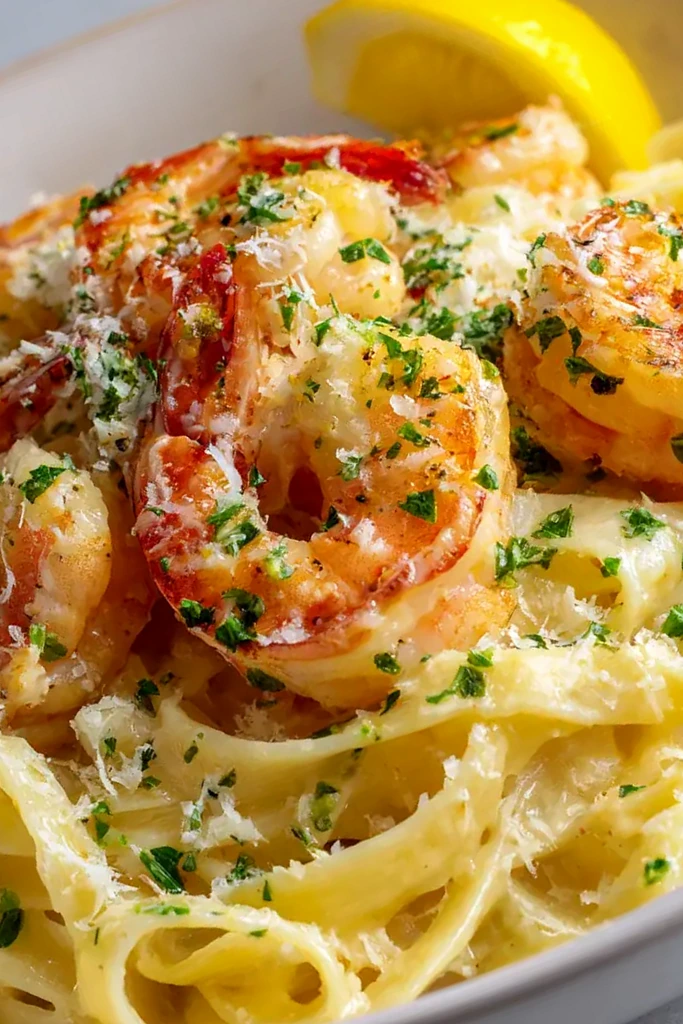
This restaurant-quality shrimp pasta combines zesty lemon and rich butter for a sophisticated meal. It is designed for busy weeknights, coming together in just 30 minutes without sacrificing depth of flavor.
List of ingredients
- 12 oz Fettuccine (approx 340g) – use a high-quality bronze-cut pasta for better sauce adhesion.
- 1 lb Large Shrimp (peeled and deveined, approx 450g) – pat these completely dry before cooking.
- 2 tbsp Extra Virgin Olive Oil (30ml) – used for the high-heat sear.
- 6 tbsp Unsalted Butter, divided (85g) – essential for building the emulsion and richness.
- 4 cloves Garlic, finely minced – provides the aromatic base of the sauce.
- 1/4 cup Vegetable Broth (60ml) – used for deglazing the pan and adding savory depth.
- 1/2 cup Heavy Cream (120ml) – creates the signature velvety texture.
- 1 Large Lemon, juiced and zested – brings essential brightness and acidity.
- 1/4 cup Fresh Parsley, finely chopped (15g) – adds color and a clean, peppery finish.
- 1/2 cup Parmesan Cheese, freshly grated (50g), plus more for garnish – adds saltiness and helps thicken the sauce.
- Kosher Salt and Freshly Cracked Black Pepper – to taste.
step-by-step instructions
- Boil the Pasta: Cook fettuccine in heavily salted water until al dente. Reserve 1 cup of the starchy pasta water before draining the noodles.
- Sear the Shrimp: Pat shrimp dry and season with salt and pepper. Heat olive oil in a large skillet over medium-high heat, sear shrimp for 1-2 minutes per side until pink with golden-brown edges, then remove and set aside.
- Sauté Aromatics: Reduce heat to medium and melt 2 tbsp of butter. Add minced garlic and cook for 30 seconds until fragrant, then deglaze with vegetable broth, scraping the pan and reducing the liquid by half.
- Emulsify the Sauce: Stir in heavy cream, lemon juice, and zest, then bring to a gentle simmer. Whisk in the remaining 4 tbsp of butter one piece at a time, then stir in parmesan cheese until melted; season with salt and pepper.
- Combine and Serve: Add the drained pasta to the sauce and toss to coat. Use reserved pasta water to adjust the consistency if the sauce is too thick. Return shrimp and parsley to the pan, toss gently, and serve with extra parmesan and a lemon wedge.
Pro Techniques for Perfect Shrimp Pasta
Achieving a Golden Sear on Shrimp
To get those professional brown edges, the shrimp must be completely dry. Use paper towels to remove all surface moisture before seasoning and hitting the hot oil. If the pan is too crowded, the shrimp will steam instead of sear, so work in batches if necessary.
Utilizing Starchy Pasta Water
The reserved pasta water is a powerful tool for emulsification. Because it contains starch from the noodles, it helps bind the fats from the butter and cream with the acidic lemon juice. Adding a splash at the end ensures the sauce clings to the pasta rather than pooling at the bottom of the plate.
Preventing Garlic from Burning
Garlic burns quickly at high temperatures, which creates a bitter taste in the sauce. Always reduce the heat from the searing temperature to medium before adding the butter and garlic. Sauté just until the aroma is released, usually around 30 seconds, before deglazing with liquid.
Whisking in Cold Butter for Glossiness
Adding butter piece by piece at the end of the sauce process is a technique called mounting. This creates a stable emulsion that gives the sauce its signature mirror-like gloss. Whisking continuously while the butter melts prevents the sauce from breaking or becoming greasy.
Ingredient Substitutions and Adaptations
Choosing Different Pasta Shapes
Fettuccine is ideal because its wide surface area holds heavy sauces well. However, linguine or spaghetti work equally well for a classic look. For a more rustic feel, try penne or fusilli, which trap the sauce inside their ridges and holes.
Swapping Heavy Cream for Lighter Options
If you prefer a lighter sauce, you can use half-and-half or whole milk mixed with a teaspoon of cornstarch. For a dairy-free version, full-fat coconut milk or cashew cream can provide a similar thickness. Note that these alternatives may slightly alter the final flavor profile.
Using Alternative Seafood
While shrimp is traditional, sea scallops are a luxurious alternative that sears beautifully. You can also use cubed salmon or firm white fish like halibut. Adjust the cooking time based on the thickness of the protein to avoid overcooking.
Replacing Parmesan Cheese
If you cannot use Parmesan, Pecorino Romano offers a similar salty, hard-cheese profile but with a sharper tang. For a vegan option, use nutritional yeast or a plant-based parmesan alternative to maintain the savory depth of the dish.
Flavor Variations to Try
Adding Spicy Heat with Red Pepper Flakes
To add a subtle kick, stir in 1/2 teaspoon of crushed red pepper flakes when sautéing the garlic. The oil will infuse the heat throughout the sauce. This pairs exceptionally well with the acidity of the lemon.
Incorporating Fresh Leafy Greens
Stirring in two cups of fresh baby spinach or chopped kale during the final tossing stage adds color and nutrition. The residual heat of the pasta and sauce will wilt the greens perfectly in about one minute. This provides a fresh contrast to the rich butter sauce.
Using Sun-Dried Tomatoes for Depth
Chopped sun-dried tomatoes add a concentrated, sweet-tart flavor that complements the shrimp. Add them to the pan during the deglazing step. They provide a pop of color and a chewy texture that enhances the overall meal.
Exploring Different Citrus Options
While lemon is the standard, lime can be used for a more tropical, zesty twist. Orange zest can also be added in small amounts to provide a floral sweetness. Always balance the citrus juice with a bit more butter if the sauce becomes too tart.
Serving Suggestions and Pairings
Best Vegetable Side Dishes
Steamed asparagus or sautéed broccolini are the best pairings for this dish. Their slightly bitter notes cut through the richness of the cream and butter. Roast them with a bit of olive oil and salt to mirror the flavors of the pasta.
Selecting the Right Salad Pairing
A crisp arugula salad with a light balsamic vinaigrette provides a refreshing contrast. The peppery nature of arugula balances the creamy sauce. Alternatively, a simple Caesar salad offers a classic Italian-American dining experience.
Complementary Bread Options
Warm garlic bread or a slice of toasted sourdough is perfect for mopping up the extra lemon butter sauce. Bruschetta topped with tomato and basil also adds a fresh, acidic element that cleanses the palate between bites.
Storage and Reheating Guidelines
Proper Refrigeration Methods
Store leftovers in an airtight container in the refrigerator for up to two days. Keep the pasta and shrimp together, but be aware that the pasta will absorb more sauce over time. This may make the dish seem drier upon reheating.
Reheating Without Overcooking Shrimp
Avoid the microwave, as it often turns shrimp rubbery and separates the cream sauce. Instead, gently warm the pasta in a skillet over low heat. Add a splash of water, broth, or a knob of butter to loosen the sauce and restore the glossy texture.
Why Freezing is Not Recommended
Cream-based sauces typically break or separate during the freezing and thawing process. Additionally, the texture of the shrimp and pasta degrades significantly in the freezer. For the best quality, this dish should be eaten fresh or refrigerated shortly after cooking.
Troubleshooting Common Issues
Fixing a Sauce That Is Too Thick
If the sauce becomes too thick or clings too tightly to the noodles, add more reserved pasta water one tablespoon at a time. Stir constantly over low heat until the sauce reaches a smooth, pourable consistency. This restores the emulsion without diluting the flavor.
Preventing the Sauce from Curdling
Curdling usually happens if the heat is too high when adding the cream or lemon juice. Keep the sauce at a gentle simmer rather than a rolling boil. If the sauce looks like it is separating, whisk in a small amount of cold butter immediately to bind it back together.
Correcting an Overly Tart Sauce
If the lemon juice makes the dish too acidic, add another tablespoon of butter or a pinch of sugar. The fat in the butter neutralizes the sharpness of the citric acid. Taste the sauce frequently before adding the pasta to ensure the balance is correct.
Frequently Asked Questions
Can I use frozen shrimp for this recipe?
Yes, frozen shrimp work perfectly as long as they are completely thawed. Thaw them in the refrigerator overnight or under cold running water. Ensure you pat them dry with paper towels before seasoning to ensure a proper sear.
How do I keep the shrimp from becoming rubbery?
The key is to avoid overcooking. Sear them quickly on high heat and remove them the moment they turn opaque. Since they are added back to the pan at the end, they will finish heating through without becoming tough.
What is the best lemon for this recipe?
Standard Eureka lemons provide the best acidic punch for this dish. Meyer lemons are a sweeter, more floral alternative and can be used if you prefer a milder citrus flavor. Always use fresh lemons rather than bottled juice for the best aroma.
Can I make this dish gluten-free?
Absolutely. Simply replace the wheat-based fettuccine with your favorite gluten-free pasta alternative, such as brown rice or chickpea pasta. Be mindful that gluten-free pasta often releases different levels of starch, so you may need to adjust the amount of pasta water used.
Print Creamy Lemon Garlic Butter Shrimp Pasta
- Total Time: 30 minutes
- Yield: 4 servings 1x
- Diet: General
Description
Create a restaurant-worthy Lemon Garlic Shrimp Pasta in just 30 minutes. This recipe features al dente fettuccine in a glossy, creamy lemon butter sauce with perfectly seared shrimp, fresh parsley, and parmesan.
Ingredients
- 12 oz Fettuccine
- 1 lb Large Shrimp, peeled and deveined
- 2 tbsp Extra Virgin Olive Oil
- 6 tbsp Unsalted Butter, divided
- 4 cloves Garlic, finely minced
- 1/4 cup Vegetable Broth
- 1/2 cup Heavy Cream
- 1 Large Lemon, juiced and zested
- 1/4 cup Fresh Parsley, finely chopped
- 1/2 cup Parmesan Cheese, freshly grated
- Kosher Salt to taste
- Freshly Cracked Black Pepper to taste
Instructions
- Step 1: Cook fettuccine in heavily salted water until al dente. Reserve 1 cup of pasta water before draining.
- Step 2: Pat shrimp dry and season with salt and pepper. Heat olive oil in a large skillet over medium-high heat. Sear shrimp for 1-2 minutes per side until pink with golden-brown edges. Remove and set aside.
- Step 3: Reduce heat to medium, add 2 tbsp butter. Add minced garlic and cook until fragrant (30 seconds). Deglaze with vegetable broth, scraping the pan, and let it reduce by half.
- Step 4: Stir in heavy cream, lemon juice, and zest. Bring to a simmer. Whisk in the remaining 4 tbsp of butter one piece at a time. Stir in the parmesan cheese until melted. Season with salt and pepper.
- Step 5: Add the drained pasta to the sauce and toss. Use reserved pasta water to adjust consistency if needed. Return shrimp to the pan with the fresh parsley. Toss to combine. Serve immediately, garnished with more parmesan and a lemon wedge.
Notes
Don’t Overcook the Shrimp: They cook very quickly and will heat up again in the final step. The Power of Pasta Water: This starchy water is the secret to a smooth, emulsified sauce that coats the noodles perfectly. Fresh is Best: Use fresh lemon juice, garlic, and parsley for the most vibrant flavor.
- Prep Time: 10 minutes
- Cook Time: 20 minutes
- Category: Dinner
- Method: Sautéing
- Cuisine: Italian-American
Nutrition
- Serving Size: 1 serving
- Calories: 750 kcal
- Sugar: 6 g
- Sodium: 1150 mg
- Fat: 48 g
- Saturated Fat: 26 g
- Unsaturated Fat: 22 g
- Trans Fat: 0 g
- Carbohydrates: 62 g
- Fiber: 4 g
- Protein: 36 g
- Cholesterol: 210 mg
Leave a Reply